
Building a robust core is not merely supplementary in gymnastics; it is the foundational pillar upon which all advanced skills, stability, and injury prevention rest. Without a deeply integrated and powerful core, gymnasts struggle with everything from maintaining a tight hollow body shape on rings to executing a clean handstand or sticking a landing. This isn't about visible abs; it's about the deep, functional strength that connects the upper and lower body, enabling efficient force transfer and precise control in dynamic movements. A weak core compromises form, reduces power output, and significantly increases the risk of back and shoulder injuries, making it a non-negotiable element of any serious gymnastics training regimen. Developing this foundational strength will also greatly enhance your balance coordination and core strength for overall athletic performance.
Understanding the Gymnastics Core
The "core" in gymnastics extends beyond the superficial abdominal muscles. It encompasses a complex network of muscles that stabilize the spine and pelvis, including the rectus abdominis, obliques (internal and external), transverse abdominis, multifidus, erector spinae, and even the glutes and hip flexors. For gymnasts, core strength translates to the ability to maintain specific body shapes under tension, generate explosive power, and absorb impact effectively. It’s the difference between a controlled, precise movement and a shaky, inefficient one.
Key Core Functions in Gymnastics:
- Shape Maintenance: Holding hollow, arch, and pike positions critical for swings, presses, and rotations.
- Power Transfer: Efficiently moving force from the lower body to the upper body (e.g., vault, tumbling) and vice versa.
- Spinal Stability: Protecting the spine during high-impact landings, twists, and inversions.
- Balance and Control: Essential for beam, handstands, and single-leg elements.
Foundational Core Exercises for Gymnasts
These exercises establish the baseline strength and body awareness necessary for more complex gymnastics skills. Focus on perfect form over high repetitions initially.
Hollow Body Hold
The hollow body position is fundamental to nearly every gymnastics skill, from swings on bars to presses on floor. It teaches full-body tension and spinal flexion control.
Execution: Lie on your back, pressing your lower back into the floor. Lift your head, shoulders, and legs slightly off the ground. Arms extend overhead, biceps by ears. Maintain a continuous curve from shoulders to hips. The key is to keep the lower back glued to the floor; if it arches, reduce the lever by bending knees or bringing arms closer to the body. Hold for prescribed durations.
Progression: Start with bent knees (tuck hollow), then straight legs (pike hollow), then straight legs with arms extended overhead. Increase hold time as strength improves.
Arch Body Hold (Superman)
The arch body hold is the antagonist to the hollow body, crucial for back extension and preparing for skills like back handsprings or kip cast to handstand. It develops posterior chain strength.
Execution: Lie face down, arms extended overhead, legs straight. Simultaneously lift your arms, chest, and legs off the floor, engaging your glutes and lower back. Keep your head neutral, looking at the floor. Avoid hyperextending the neck. Hold for time.
Progression: Increase hold time. For added challenge, perform dynamic arch-to-hollow transitions.
L-Sit Progressions
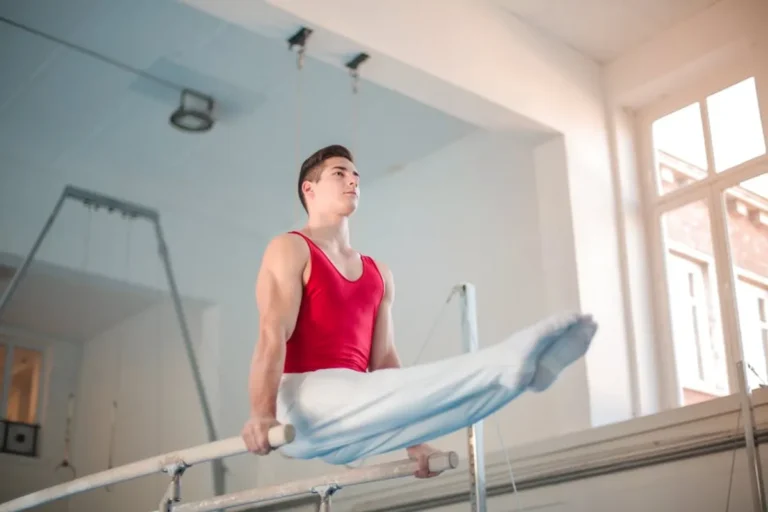
The L-sit demands significant abdominal compression and hip flexor strength, vital for presses to handstand, planches, and various bar work. It also builds shoulder depression strength.
Execution: Sit on the floor with legs extended, hands pressed firmly beside your hips, fingers pointing forward. Push through your hands to lift your hips and legs off the floor, keeping your legs straight and parallel to the ground, forming an "L" shape. Maintain straight arms and depressed shoulders.
Progression:
- Tuck L-Sit: Lift hips with knees bent towards chest.
- Single Leg L-Sit: One leg bent, one extended.
- Straddle L-Sit: Legs extended wide.
- Full L-Sit: Both legs extended straight forward.
Hold each position for increasing durations.
Pro Tip: Consistency trumps intensity for core development. Daily short sessions (5-10 minutes) focused on perfect form are more effective than infrequent, exhaustive workouts. Prioritize quality over quantity to build neurological pathways for optimal muscle activation and prevent compensation patterns that lead to injury.
Advanced Gymnastics Core Drills
Once foundational strength is established, these drills introduce more dynamic movement and greater challenge, mimicking the demands of competitive gymnastics.
Dragon Flags
A highly advanced exercise that requires immense full-body tension and core control. It works the entire anterior core chain.
Execution: Lie on your back on a bench, gripping the bench behind your head. Lift your entire body (from shoulders to feet) into a straight line, parallel to the bench. Slowly lower your body, maintaining the straight line, until your lower back almost touches the bench. Control the eccentric phase. Avoid bending at the hips. The movement should originate from the core, not the hips or legs.
Progression: Start with bent knees (tuck dragon flag), then one leg extended, progressing to both legs extended. Reduce the range of motion initially if needed.
V-Ups and Tuck-Ups
These dynamic exercises combine spinal flexion and hip flexion, building explosive core power and coordination.
V-Ups: Lie on your back, arms extended overhead, legs straight. Simultaneously lift your torso and legs, reaching your hands towards your toes, forming a "V" shape. Control the descent back to the starting position.
Tuck-Ups: Similar to V-ups, but bring your knees to your chest while simultaneously lifting your torso. This is a less intense variation, useful for building up to V-ups.
Best for: Developing dynamic core strength, crucial for tumbling, leaps, and quick transitions.
Hanging Leg Raises (and Variations)
These target the lower abs and hip flexors, essential for controlled leg movements and compression skills.
Execution: Hang from a pull-up bar with an overhand grip. Keeping your legs straight, slowly raise them until they are parallel to the floor (L-sit position). For increased difficulty, raise them higher towards the bar (toes-to-bar). Control the lowering phase to avoid swinging.
Variations: Bent-knee raises (easier), oblique raises (twisting legs to the side), windshield wipers (advanced, rotating legs side-to-side while maintaining an L-sit).
Integrating Core Training into Your Routine
Effective core training for gymnastics isn't an isolated activity; it's woven into the fabric of daily practice. Aim for 3-5 core sessions per week, with a mix of static holds and dynamic movements.
- Warm-up Activation: Incorporate hollow and arch body holds for 30-60 seconds each during your warm-up to prime the core.
- Dedicated Sessions: Perform 2-3 dedicated core workouts per week, focusing on 3-5 exercises with 3-4 sets of 10-15 repetitions or 30-60 second holds.
- Skill Integration: Actively engage the core during skill work. For instance, consciously maintain a hollow body during kip swings or a tight arch during back handsprings.
- Recovery: Allow for adequate rest. While the core can be trained frequently, listen to your body and avoid overtraining, which can lead to fatigue and compromised form.
Sustaining Core Development
Building core strength for gymnastics is a continuous process, not a destination. As skills advance, so too must the demands on the core. Regular assessment of your hollow body hold duration, L-sit hold time, and the quality of your dynamic core movements will indicate progress. Remember that a strong core underpins all aspects of gymnastics performance, from aesthetics to safety. Consistent, targeted effort will yield significant returns in skill acquisition, execution, and longevity in the sport.
Frequently Asked Questions
How often should a gymnast train their core?
For optimal development, gymnasts should aim for 3-5 focused core training sessions per week. This allows for sufficient stimulus and recovery, preventing overtraining while consistently building strength and endurance.
What is the most important core exercise for gymnastics?
The hollow body hold is arguably the most critical core exercise for gymnastics. It teaches the fundamental body tension and spinal flexion required for nearly all skills, acting as a baseline for stability and control.
Can I train my core every day without overtraining?
While the core muscles can recover relatively quickly, training them intensely every day can lead to fatigue and diminished performance. It's more effective to alternate between intense sessions and lighter, active recovery days, or integrate core work into skill training rather than constant, isolated heavy lifting.
How long does it take to see results in core strength for gymnastics?
Visible improvements in core strength and control can often be noticed within 4-6 weeks of consistent, structured training. However, significant gains in advanced skill execution due to enhanced core strength typically require several months of dedicated effort.