Developing foundational strength, flexibility, and body control for gymnastics does not require a dedicated gym; effective conditioning can be achieved consistently within a home environment. This approach prioritizes bodyweight exercises, adaptable equipment, and structured routines to build the specific physical attributes necessary for gymnastic movements. The focus here is on actionable strategies and precise exercise selections that yield tangible results for individuals committed to training outside a formal facility, ensuring progress without extensive investment in specialized apparatus.
Establishing Foundational Principles for Home Conditioning
Effective home gymnastics conditioning relies on adherence to several core principles that maximize results from limited resources. These principles emphasize progressive overload, consistent application, and a deep understanding of body mechanics, which are critical for both performance enhancement and injury prevention.
- Bodyweight Mastery: The cornerstone of gymnastics is the ability to control one's own body. Exercises should primarily utilize bodyweight, focusing on perfect form before increasing repetitions or difficulty. This builds intrinsic strength and proprioception.
- Progressive Overload: To continuously improve, the body must be challenged beyond its current capacity. This can be achieved by increasing repetitions, sets, reducing rest times, or advancing to more complex exercise variations. For instance, progressing from knee push-ups to full push-ups, then to decline push-ups.
- Consistency and Frequency: Short, regular conditioning sessions are often more effective than infrequent, long ones. Aim for 3-5 sessions per week, allowing for adequate recovery. This regular stimulus promotes adaptation and reinforces motor patterns.
- Specific Strength and Flexibility: Conditioning should target the muscle groups and ranges of motion most relevant to gymnastics. This includes significant emphasis on core stability, shoulder girdle strength, hip flexibility, and spinal articulation.
Essential Equipment for Maximizing Home Workouts
While bodyweight forms the primary resistance, a few inexpensive and space-efficient tools can significantly enhance the scope and effectiveness of home gymnastics conditioning. Each item serves a specific purpose in targeting strength, flexibility, or stability.
Yoga Mat: Provides cushioning for floor exercises, protects joints, and offers a non-slip surface for stability. Essential for core work, stretching, and handstand practice.
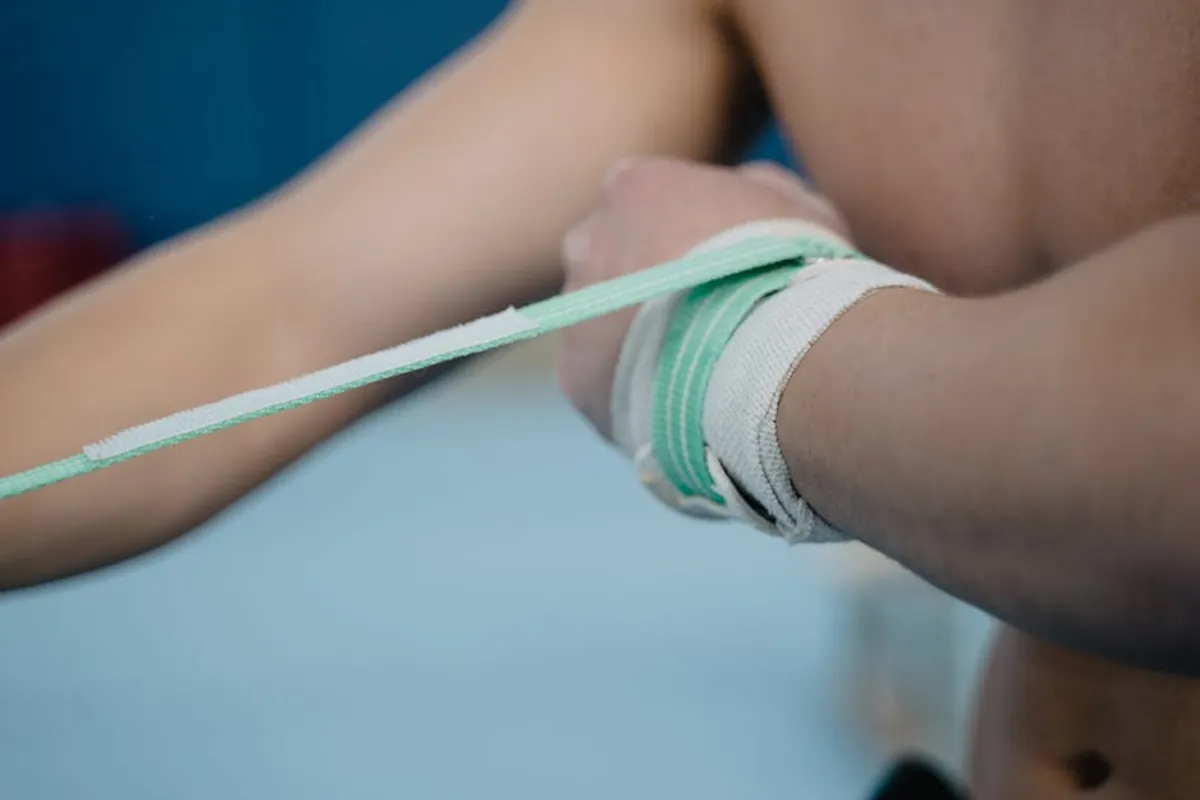
Resistance Bands (Loop and Long):
Best for: Adding external resistance to bodyweight movements, assisting with flexibility, and facilitating muscle activation.
Loop bands are effective for glute activation, hip abductor strengthening, and adding resistance to squats or lunges. Long bands can assist with pull-up progressions, add resistance to push-ups, or deepen stretches by providing leverage.
Doorway Pull-Up Bar:
Best for: Developing upper body pulling strength, crucial for swings, casts, and holds.
Allows for various grip positions (pronated, supinated, neutral) to target different back and arm muscles. Can also be used for hanging core exercises like leg raises.
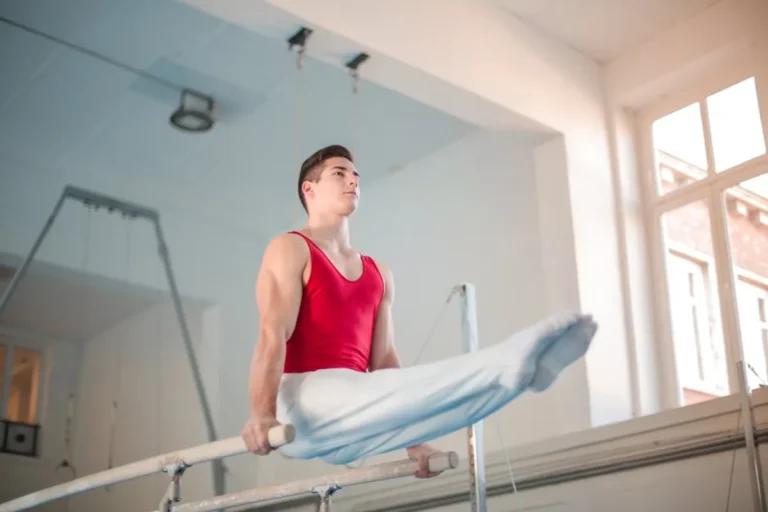
Parallettes or Push-Up Handles:
Best for: Increasing range of motion for pushing exercises, wrist conditioning, and practicing handstand progressions or L-sits with wrist comfort.
Elevating the hands allows for deeper push-ups, enhancing chest and shoulder engagement. They also provide a stable, neutral wrist position that can reduce strain compared to flat-hand floor exercises.
Targeted Exercise Categories and Examples
A comprehensive home conditioning program integrates exercises across several key physical attributes. The following examples provide a foundation for building strength, flexibility, and stability specific to gymnastics demands.
Strength Development: Upper Body, Core, and Lower Body
Upper Body:
Focus on pushing and pulling movements.
Push-up Variations: Standard push-ups, decline push-ups (feet elevated), pseudo planche push-ups (hands lower than hips, lean forward).
Pull-up Variations (with bar): Dead hang, active hang, scapular pulls, negative pull-ups, full pull-ups.
Dips (with parallettes or chairs): Bodyweight dips to improve triceps and chest strength.
Core:
Emphasize static holds and dynamic movements that integrate the entire core musculature.
Hollow Body Hold: Lie on back, lower back pressed to floor, arms and legs extended and slightly elevated. Hold for time.
Arch Hold: Lie on stomach, arms and legs extended and slightly elevated, engaging glutes and lower back. Hold for time.
V-ups: Start supine, simultaneously lift torso and legs to meet in a 'V' shape.
Plank Variations: Standard plank, side plank, plank with leg lift, plank with shoulder taps.
Lower Body:
Develop explosive power and stability.
Squat Variations: Bodyweight squats, jump squats, pistol squats (single leg).
Lunge Variations: Forward lunges, reverse lunges, lateral lunges.
Glute Bridges/Single Leg Glute Bridges: Strengthen glutes and hamstrings, crucial for hip extension.
Flexibility and Mobility
Prioritize active flexibility, where muscles actively pull into a stretch, and passive flexibility, holding stretches for longer durations.
Pike Stretch: Sit with legs extended, reach for toes, maintaining a straight back.
Straddle Stretch: Sit with legs wide, lean forward, reach side to side.
Bridge (Wheel Pose): Progress from supported bridge to full bridge for spinal flexibility and shoulder opening.
Shoulder Dislocates (with band or stick): Improve shoulder mobility and overhead range of motion.
Balance and Proprioception
These exercises enhance body awareness and control, critical for complex gymnastic skills.
Single-Leg Balance: Stand on one leg, hold for time. Progress by closing eyes or adding arm movements.
Handstand Holds (against wall): Gradually increase hold time, focusing on alignment and core engagement.
L-Sits (on floor or parallettes): Hold body in an L-shape with legs extended, engaging core and hip flexors.
Pro Tip: Focus on Form Over Reps
In gymnastics conditioning, maintaining impeccable form throughout each exercise is paramount. Incorrect technique not only diminishes the effectiveness of the exercise but significantly increases the risk of injury, especially when working with bodyweight. Prioritize controlled movements, full range of motion, and proper muscle engagement over rushing through repetitions or attempting advanced variations prematurely. If form breaks down, reduce the difficulty or rest. Recording yourself can provide invaluable feedback for self-correction.
Structuring Your Home Conditioning Routine
A well-structured routine ensures balanced development and prevents plateaus. Consider a circuit-style approach for efficiency, or a focused approach for specific skill development.
Sample Beginner Routine (30-45 minutes, 3 times/week)
Warm-up (5-10 minutes): Light cardio, dynamic stretches (arm circles, leg swings).
Circuit (Perform 2-3 rounds, 60 seconds rest between rounds):
1. Bodyweight Squats: 10-15 reps
2. Knee Push-ups: 8-12 reps
3. Hollow Body Hold: 20-30 seconds
4. Glute Bridges: 12-15 reps
5. Plank: 30-45 seconds
6. Assisted Pull-ups (with band or negatives): 5-8 reps (if using a bar)
Cool-down (5-10 minutes): Static stretches (pike, straddle, quad stretch).
Sample Intermediate Routine (45-60 minutes, 4 times/week)
Warm-up (10 minutes): Dynamic stretches, light joint rotations.
Strength Block (3-4 sets of 8-12 reps, 60-90 seconds rest):
1. Push-ups (standard or decline)
2. Pull-ups (full or weighted with band)
3. Pistol Squat Progression (assisted or full)
4. L-Sit Progression (tuck L-sit, single leg L-sit)
Core & Flexibility Block (Perform 2-3 rounds, minimal rest):
1. Hollow Body Rocks: 10-15 reps
2. Arch Rocks: 10-15 reps
3. V-ups: 10-12 reps
4. Pike Stretch: 30-45 seconds hold
5. Bridge Progression: 5-8 reps or 20-30 seconds hold
Cool-down (10 minutes): Deeper static stretches, foam rolling if available.
Sustaining Progress in Your Home Conditioning
Consistent progress in home gymnastics conditioning requires a strategic approach to training volume, intensity, and recovery. Implement these practices to ensure long-term development.
Document Your Workouts: Keep a log of exercises, sets, reps, and hold times. This objective data allows you to track progress, identify plateaus, and make informed adjustments to your routine. Seeing quantifiable improvements is a significant motivator.
Listen to Your Body: Differentiate between muscle soreness and pain. Overtraining can lead to injuries and setbacks. Incorporate active recovery days (light stretching, walking) and ensure adequate sleep and nutrition to support muscle repair and growth.
Seek Feedback (if possible): While training at home, it can be beneficial to occasionally record your form and review it, or share it with a knowledgeable peer or coach for constructive criticism. External perspective can highlight subtle form errors you might miss.
Set Realistic Goals: Understand that gymnastic strength and flexibility take time to develop. Celebrate small victories and maintain patience. Focus on mastering foundational movements before attempting more advanced skills.
Frequently Asked Questions
How often should I do gymnastics conditioning at home?
Aim for 3-5 sessions per week, allowing at least one rest day between intense workouts. Consistency is more important than duration; shorter, frequent sessions yield better long-term results.
Can I build significant gymnastics strength without a gym?
Absolutely. Gymnastics is fundamentally about bodyweight mastery. Many elite gymnasts build substantial strength through calisthenics and basic conditioning. The key is progressive overload and consistent application of foundational exercises.
What if I don't have a pull-up bar?
While a pull-up bar is highly recommended for upper body pulling strength, alternatives include inverted rows using a sturdy table or resistance band rows. Focus on exercises that strengthen your back and biceps.
How long does it take to see results from home conditioning?
Visible strength and flexibility improvements can often be noticed within 4-6 weeks of consistent, structured training. More significant changes in skill execution and body composition typically require 3-6 months or more, depending on starting fitness levels and dedication.