Developing exceptional core strength is not merely an advantage for gymnasts; it is the absolute bedrock upon which all advanced skills are built and executed safely. Without a robust, responsive core, gymnasts cannot generate the power needed for explosive movements, maintain the precise body control required for intricate balances, or absorb the forces encountered during landings and impacts. This foundational strength enables the transfer of power between upper and lower body, stabilizes the spine during dynamic rotations, and significantly mitigates injury risk in a sport demanding peak physical control.
The Foundational Role of Core Engagement
In gymnastics, "core strength" extends beyond visible abdominal muscles. It encompasses the entire lumbo-pelvic-hip complex—the deep abdominal muscles (transversus abdominis, internal obliques), erector spinae, multifidus, quadratus lumborum, and the glutes. These muscles work synergistically to create a stable central axis, allowing for efficient movement and force production. Gymnasts prioritize not just strength, but also endurance and precise motor control of these muscle groups.
Isometric Holds: The Pillars of Stability
Isometric contractions, where muscles engage without changing length, are fundamental to gymnastic core training. These holds build sustained strength and body awareness crucial for maintaining shapes in the air or on apparatus.
- Hollow Body Hold: This is perhaps the most critical isometric hold. Lying supine, the gymnast lifts the head, shoulders, and legs slightly off the floor, pressing the lower back into the ground. The arms extend overhead or by the sides. This position teaches full-body tension and spinal flexion, essential for swings, presses, and rotations. Progressions involve extending the limbs further or holding for longer durations.
- Arch Body Hold (Superman): The counterpart to the hollow body, performed prone. The gymnast lifts the chest, arms, and legs off the floor, engaging the posterior chain (lower back, glutes, hamstrings). This builds spinal extension strength, vital for handstands, back layouts, and bridging.
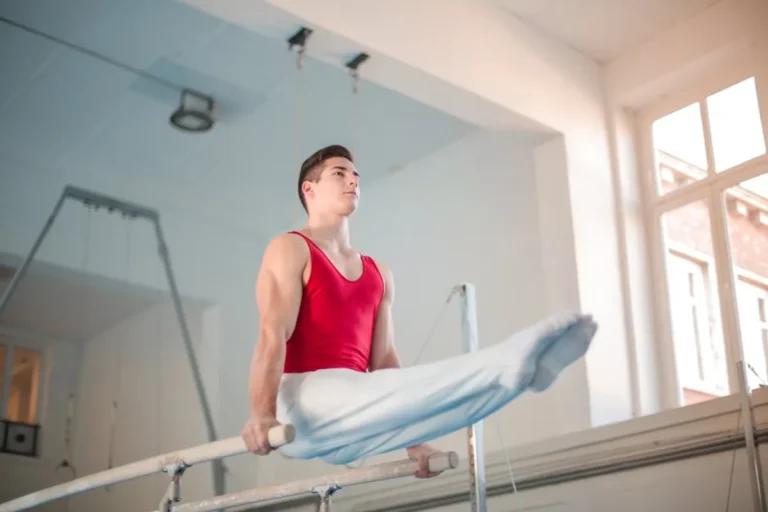
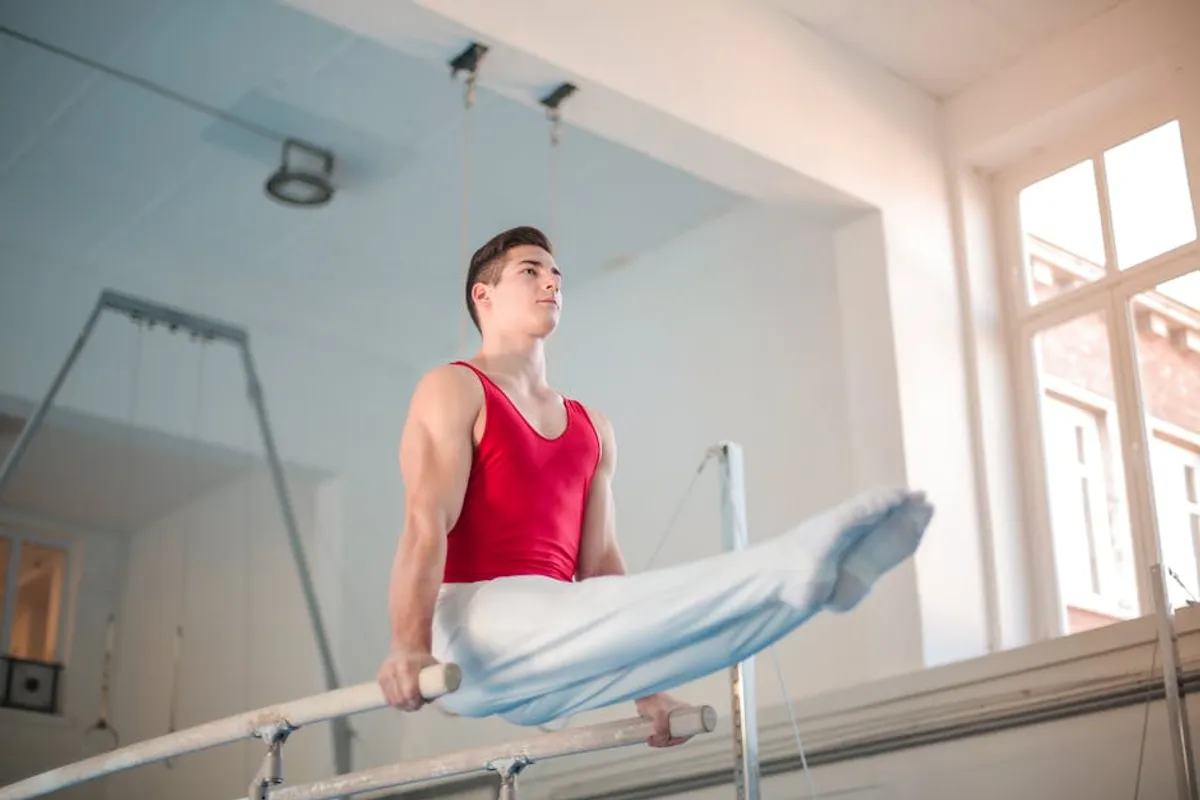
- L-Sit/V-Sit: These advanced holds require significant abdominal and hip flexor strength to maintain a seated position with legs extended straight out (L-Sit) or angled upwards (V-Sit), supported only by the hands. They are directly transferable to skills like L-sit presses to handstand or V-sit holds on parallettes.
Dynamic Core Movements for Power and Control
While isometric strength provides stability, dynamic exercises develop the power and coordination needed for complex skills. These movements involve controlled flexion, extension, and rotation of the trunk.
Targeting Specific Core Functions
Effective dynamic core training isolates and integrates different muscle groups for comprehensive development.
- Leg Raises (Straight Leg, Bent Knee, Hanging): These variations primarily target the lower abdominals and hip flexors. Straight leg raises, especially hanging from a bar, demand significant core engagement to prevent the lower back from arching. Bent knee raises are a common progression.
- V-Ups and Tuck-Ups: Explosive movements that combine spinal flexion and hip flexion. V-ups involve simultaneously lifting legs and upper body to meet in a "V" shape, while tuck-ups bring knees to chest. These build explosive power for sit-ups and rotational elements.
- Dragon Flags: An advanced exercise where the gymnast lies supine, grips an overhead support, and lifts the entire body from shoulders to feet in a straight line, lowering slowly. This requires immense anti-extension strength and full core integration.
- Ab Wheel Rollouts: An anti-extension exercise that challenges the core to prevent the spine from hyperextending as the body extends forward. This builds eccentric strength and control.
Pro Tip: Prioritize impeccable form over the number of repetitions or duration of holds. A poorly executed core exercise can reinforce incorrect movement patterns, leading to compensation and potential injury. Focus on slow, controlled movements and full muscle engagement, ensuring the lower back remains protected and stable throughout the exercise.
Integrating Core Work into Training Regimens
Gymnasts typically integrate core conditioning throughout their training, not just in a dedicated "abs" session. Core work might appear in:
- Warm-ups: Light hollow and arch holds activate the core before more intense activity.
- Skill-specific conditioning: Core exercises directly supporting a new skill (e.g., L-sits for press handstands).
- General conditioning: Dedicated sets of dynamic and isometric exercises at the end of a session.
- Daily practice: Maintaining core tension and awareness is emphasized in every movement, from walking to complex routines.
Consistency is paramount. Short, frequent core sessions are often more effective than infrequent, exhaustive ones. Breathing techniques, specifically bracing the core, are also taught to maximize stability and power during exertion.
Sustaining Core Strength for Performance Longevity
The continuous development of core strength is an ongoing process for gymnasts, adapting as skills advance and physical demands increase. It's not a static achievement but a dynamic attribute that requires constant attention. By focusing on progressive overload—gradually increasing the difficulty, duration, or resistance of exercises—gymnasts ensure their core remains a reliable power center. This sustained commitment to core development is what allows them to execute complex, high-amplitude movements with precision, power, and a reduced risk of injury, enabling a longer and more successful career in the sport.
Frequently Asked Questions
How often should gymnasts train their core?
Many gymnasts train their core daily, often incorporating short, focused sets into warm-ups, skill work, and conditioning. The intensity and duration vary, but consistency is key for continuous development and maintenance.
What is the most important core exercise for gymnasts?
The hollow body hold is widely considered the most fundamental core exercise for gymnasts due to its direct application to maintaining body tension and shape in nearly all gymnastic skills, from swings to handstands.
Can core strength prevent injuries in gymnastics?
Yes, a strong and well-controlled core significantly reduces the risk of injuries, particularly to the lower back and shoulders. It provides spinal stability, improves posture, and ensures efficient transfer of force, preventing undue stress on joints and ligaments.
Is it possible to overtrain the core?
While the core muscles are resilient, overtraining is possible, especially if proper recovery and progressive loading are not observed. Symptoms might include persistent soreness, decreased performance, or compensatory movements. It's important to listen to the body and allow for adequate rest.