Developing specific strength is fundamental for female gymnasts aiming for consistent performance and injury resilience across all apparatuses. Unlike general fitness, gymnastics strength training prioritizes a unique blend of absolute strength, power, muscular endurance, and highly specialized core stability, directly supporting complex skills like dynamic tumbling, precise beam work, and powerful bar routines. This guide outlines the essential components and programming considerations for effective strength development tailored to the demands of women's gymnastics, moving beyond generic workouts to focus on functional, sport-specific adaptations.
Foundational Principles of Gymnastics Strength Development
Effective strength training for gymnasts is not about building bulk, but about enhancing relative strength – the ability to move one's own bodyweight with maximal force and control. This requires a focus on compound movements, isometric holds, and eccentric loading. The goal is to develop a robust physical foundation that supports skill acquisition and high-intensity demands, minimizing injury risk by strengthening the connective tissues and stabilizing muscles around critical joints like shoulders, wrists, and ankles.
Key considerations include:
- Relative Strength: The ability to control and move one's bodyweight efficiently through various planes of motion. Examples include pull-ups, push-ups, handstands, and core compression exercises.
- Muscular Endurance: The capacity to perform repeated efforts or maintain holds for extended periods, crucial for routines that last 30-90 seconds. This is developed through higher repetitions, timed holds, and circuit training.
- Power: The ability to generate maximal force quickly, essential for tumbling passes, vaulting, and dynamic bar releases. Plyometrics, medicine ball throws, and explosive jumps are key components.
- Joint Stability and Mobility: Strength must be balanced with flexibility and control through a full range of motion to execute skills safely and effectively.
Core Strength and Stability for Performance
The core is the nexus of all gymnastic movement, translating force between the upper and lower body and providing stability for intricate balance and powerful rotations. A strong core in gymnastics extends beyond superficial abdominal muscles, encompassing the entire trunk, hips, and glutes. Training should emphasize anti-extension, anti-flexion, anti-lateral flexion, and anti-rotation to prepare the body for the multi-directional forces experienced during routines.
Exercises should progress from static holds to dynamic movements, integrating core engagement into full-body patterns. For instance, hollow body and arch body holds establish fundamental spinal positioning and full-body tension, while V-ups and leg lifts develop dynamic compression strength. Incorporating exercises that challenge stability on unstable surfaces or through unilateral movements further enhances proprioception and reactive core strength.
Upper Body Power and Endurance
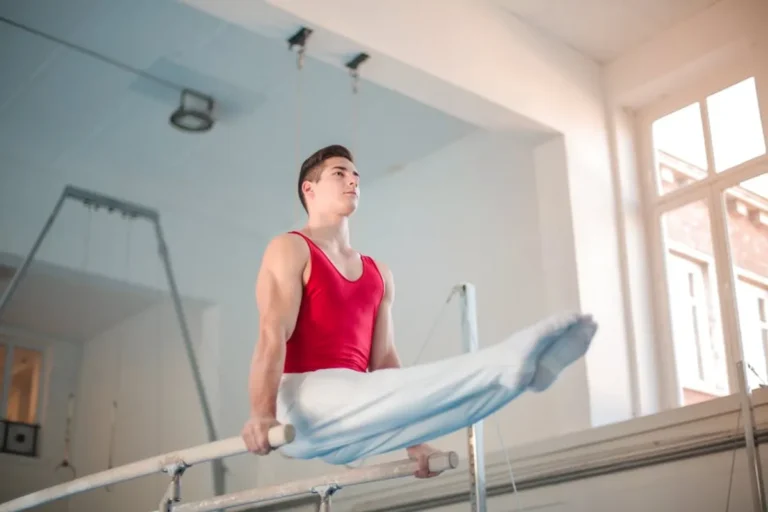
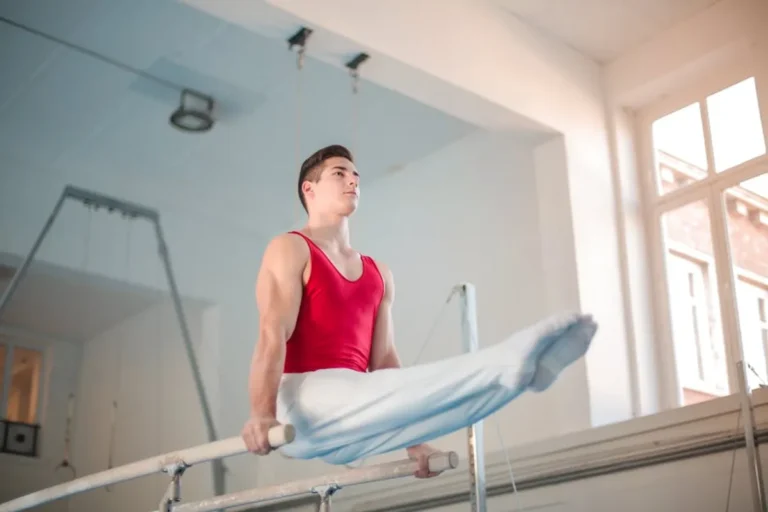
The upper body is critical for bars, vault, and floor, demanding both explosive power for releases and sustained endurance for holds and swings. Training should target the shoulders, back, chest, and arms with a combination of pulling and pushing movements, often involving bodyweight and gymnastic-specific apparatuses.
Pulling strength is developed through various grip positions on the bar (pronated, supinated, neutral), progressing from assisted pull-ups to L-sit pull-ups and eventually one-arm variations. Pushing strength is built with progressions from floor push-ups to handstand push-ups and planche variations. Integrating ring work introduces an element of instability that significantly challenges shoulder girdle strength and control, translating directly to apparatus performance.
Pro Tip: Prioritize scapular control in all upper body exercises. Actively depressing and retracting the shoulder blades during pulling movements, and protracting them during pushing, protects the shoulders and optimizes force transfer. Neglecting this leads to instability and increased injury risk, particularly in the rotator cuff and labrum.
Lower Body Explosiveness and Control
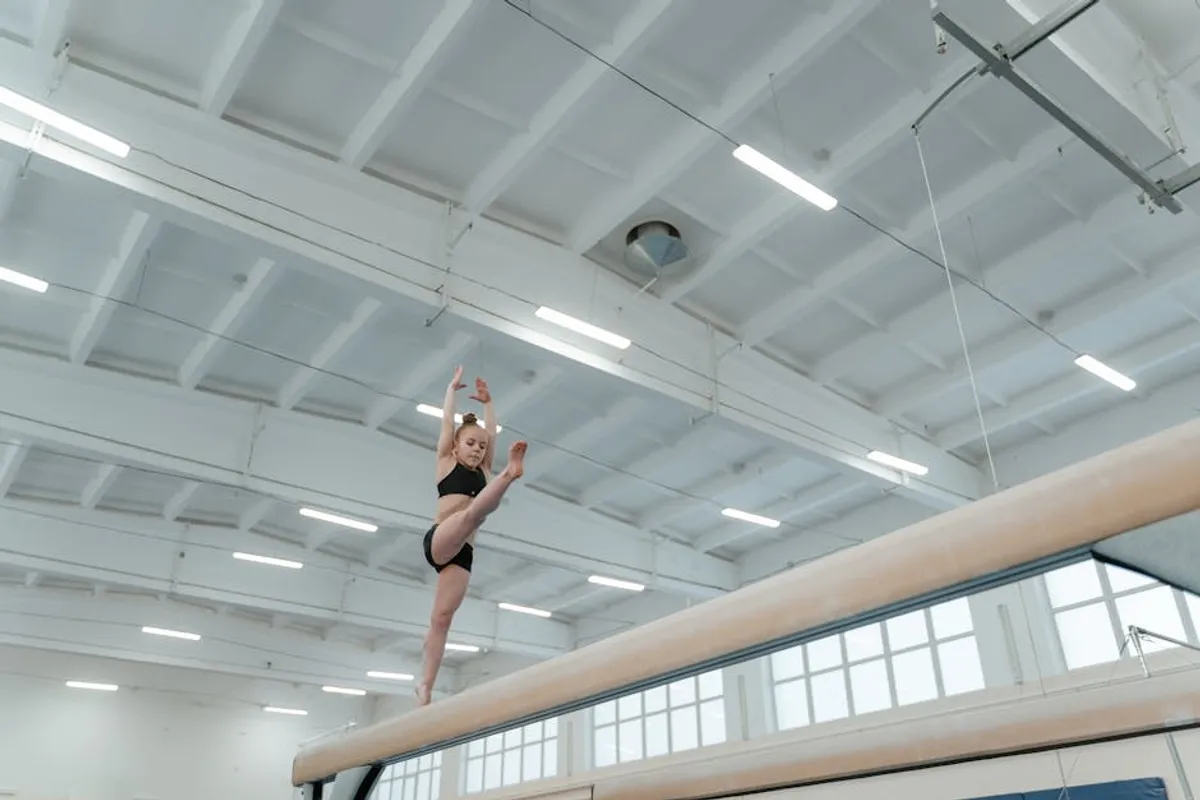
While often associated with upper body dominance, women's gymnastics relies heavily on lower body power for vaulting, tumbling take-offs, and powerful leaps on floor and beam. Explosive leg strength is crucial for generating height and distance, while precise control is needed for landings and balance.
Training should include plyometric exercises like box jumps, broad jumps, and hurdle hops to develop reactive strength and power. Squat and lunge variations, with bodyweight or external load, build foundational strength. Single-leg exercises, such as pistol squats or Bulgarian split squats, improve balance, unilateral strength, and address muscular imbalances. Emphasize controlled landings in all jumping activities to reinforce joint stability and absorb impact effectively.
Programming for Progressive Overload
Effective strength training requires systematic progression. Simply repeating the same exercises indefinitely will lead to plateaus. Progressive overload means continually challenging the body to adapt, either by increasing resistance, repetitions, sets, decreasing rest time, or increasing the complexity of the movement.
For gymnasts, this often means moving from foundational bodyweight exercises to more advanced variations (e.g., tuck planches to straddle planches), adding external resistance judiciously, or increasing the duration of isometric holds. Periodization, the systematic planning of training over time, is also critical. This involves cycling through phases of higher volume/lower intensity and lower volume/higher intensity to optimize adaptation, prevent overtraining, and peak for competitions.
Injury Mitigation and Recovery Considerations
High-level gymnastics places significant stress on the body. Strategic strength training is a primary tool for injury prevention, as stronger muscles and connective tissues are more resilient. However, overtraining or improper technique can negate these benefits. Integrating adequate rest and recovery is as crucial as the training itself.
Active recovery, proper nutrition, hydration, and sufficient sleep facilitate tissue repair and adaptation. Incorporating pre-habilitation exercises that target common weak points (e.g., rotator cuff work, ankle stability drills) can proactively reduce injury risk. Listening to the body and adjusting training loads based on fatigue levels are non-negotiable for long-term health and performance.
Implementing Your Training Plan
Successful implementation of a strength training guide requires consistency, attention to detail, and often, coaching oversight. Begin with a thorough assessment of current strength levels and identify specific areas for development based on individual gymnastic goals. Gradually introduce new exercises and progressions, always prioritizing proper form over quantity or speed.
Integrate strength work into the overall training schedule, ensuring it complements, rather than detracts from, skill development and conditioning. For younger gymnasts, focus on foundational body control and movement patterns before introducing higher-intensity or complex strength work. Regularly review progress and adjust the plan as the gymnast adapts and evolves.
Frequently Asked Questions
How often should female gymnasts strength train?
Most competitive gymnasts benefit from 2-4 dedicated strength sessions per week, depending on their age, training phase, and overall schedule. These sessions should be strategically placed to allow for adequate recovery between high-intensity skill work and strength training.
Is weightlifting safe for young gymnasts?
Yes, when properly supervised and programmed. The focus should be on proper form, body control, and progressive resistance using bodyweight, bands, or light weights. The goal is to build strength and movement patterns, not necessarily maximal lifts, especially in prepubescent athletes.
What is the difference between general strength and gymnastics-specific strength?
General strength builds overall muscle mass and power, while gymnastics-specific strength targets the unique demands of the sport, emphasizing relative strength, muscular endurance, power, and precise body control through gymnastic-specific movements and ranges of motion.