The pursuit of exceptional core strength is fundamental to gymnastics, distinguishing athletes who can execute complex maneuvers with precision, power, and control. Unlike general fitness approaches, gymnastic core development is not merely about aesthetics or isolated muscle groups; it is a highly specialized, integrated system designed to optimize stability, transfer force, and prevent injury across a vast range of dynamic and static movements. Understanding this methodology offers insights into building foundational physical capabilities that underpin peak athletic performance.
Defining Core Strength in Gymnastics
In gymnastics, the "core" extends beyond the abdominal muscles to encompass the entire lumbo-pelvic-hip complex, including the deep spinal stabilizers, obliques, hip flexors, and glutes. Its primary function is to act as a stable anchor for limb movement and a conduit for power generation. A gymnast's core strength is not measured by the ability to perform a high number of crunches, but by the capacity to maintain rigid body shapes under extreme stress, absorb impact, and rapidly transition between positions without energy leakage. This involves both isometric endurance – holding static positions against gravity – and dynamic power – generating force through movement.
Foundational Principles of Gymnastic Core Training
Gymnasts build core strength through a systematic application of specific training principles, emphasizing control, consistency, and progressive challenge.
Isometric Holds: Stability and Endurance
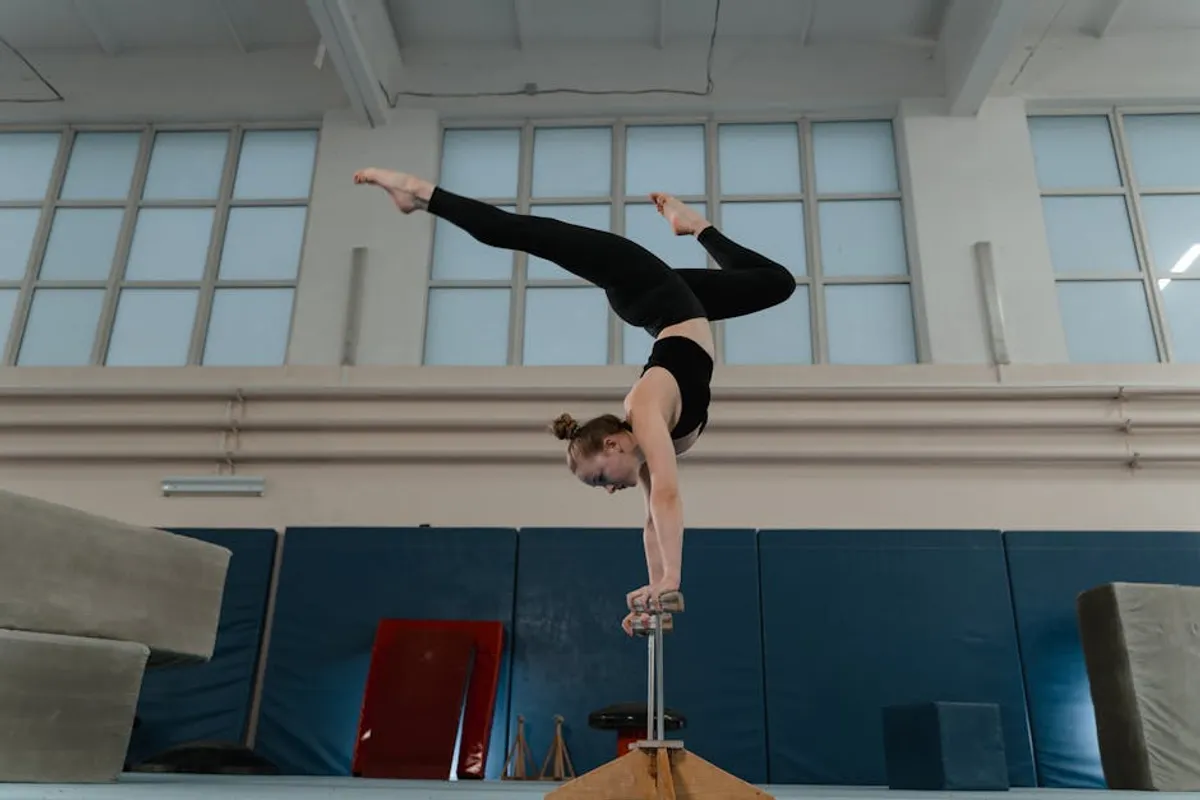
Isometric exercises are cornerstones of gymnastic core training. These involve contracting muscles without changing their length, crucial for maintaining static positions like handstands, planches, and L-sits. The goal is to develop sustained tension and stability, preventing unwanted movement in the torso. This endurance is critical for holding complex skills and resisting gravitational forces.
Dynamic Movements: Power and Control
While static strength is vital, gymnasts also require dynamic core power to execute explosive movements such as tumbling, vaulting, and dismounts. These exercises involve controlled movement through a range of motion, often requiring rapid contraction and relaxation of core muscles. The focus here is on the ability to generate force efficiently and to decelerate effectively, translating into powerful, controlled transitions.
Progressive Overload and Specificity
Core training in gymnastics follows a strict progression. Athletes start with foundational holds and movements, gradually increasing duration, range of motion, leverage, or adding external resistance. Training is highly specific, meaning exercises mimic the demands of actual gymnastic skills. For example, hollow body holds directly translate to the body tension required in swings and flips.
Pro Tip: Prioritize form over repetition or duration. Incorrect execution of core exercises not only diminishes their effectiveness but can also reinforce poor movement patterns or lead to injury. Focus on achieving perfect body lines and complete muscle engagement before attempting to increase the difficulty or volume of any core drill.
Key Exercises for Gymnastic Core Development
A gymnast's core routine integrates a variety of exercises, each targeting specific aspects of strength and control.
- Hollow Body and Arch Body Holds: These fundamental exercises teach full-body tension and the ability to maintain a rigid, slightly rounded (hollow) or arched shape. The hollow body position is central to almost every gymnastic skill, providing a stable platform for limb movement.
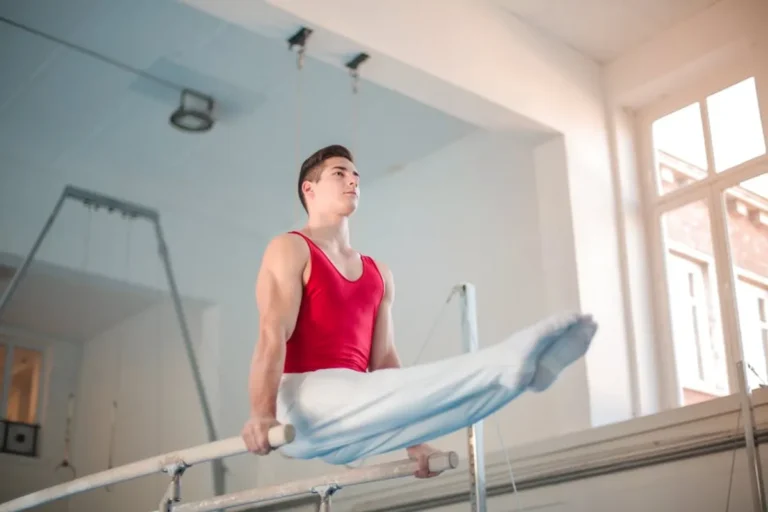
- L-sits and V-ups: L-sits develop isometric strength in the hip flexors and abdominals, requiring the athlete to hold their legs straight out in front while supported by their hands. V-ups are dynamic, combining abdominal flexion with hip flexion to bring the body into a "V" shape, building explosive core power.
- Dragon Flags and Leg Raises: Advanced exercises like dragon flags demand extreme eccentric and concentric strength from the entire anterior core, allowing the athlete to lower and raise their body in a rigid plank. Various leg raise progressions target the lower abdominals and hip flexors, crucial for controlled leg movements.
- Rotational Core Work: Exercises such as Russian twists (with controlled movement, not momentum) and medicine ball throws are incorporated to develop the oblique muscles and improve the core's ability to resist and generate rotational forces, vital for twisting elements.
Integrating Core Work into Training Programs
Core training is not an isolated segment but an embedded component of a gymnast's overall conditioning. It is often performed daily, either as a warm-up, a dedicated conditioning block, or integrated into skill training. The volume and intensity are carefully managed to allow for recovery and adaptation. Coaches utilize periodization, varying the focus between endurance, strength, and power depending on the competitive season and the athlete's specific needs.
Sustaining Core Strength for Performance and Injury Prevention
The continuous development and maintenance of core strength are paramount for a gymnast's long-term career. A strong, resilient core mitigates the risk of back, hip, and shoulder injuries by stabilizing the trunk during high-impact landings and repetitive movements. It also enables athletes to learn and master increasingly complex skills, as a solid core foundation provides the necessary control and power transfer to execute advanced techniques safely and effectively. This sustained focus ensures not only peak performance but also career longevity.
Actionable Core Development
Building gymnastic-level core strength requires a disciplined, progressive, and highly specific training regimen. It emphasizes full-body tension, isometric endurance, and dynamic power, all integrated through precise, controlled movements. For anyone looking to develop a truly functional and resilient core, adopting the principles of gymnastic conditioning – focusing on foundational holds, progressive overload, and meticulous form – offers a robust pathway to superior physical capability.
FAQ
Q: How often do gymnasts train their core?
A: Most gymnasts incorporate core training into their daily routines, often in short, intense sessions, or as part of warm-ups and cool-downs, adapting frequency and intensity based on their training cycle and individual needs.
Q: Is gymnastic core training suitable for everyone?
A: While the principles are beneficial, the intensity and specific exercises may need modification for beginners or individuals with pre-existing conditions. Starting with foundational exercises and gradually progressing is key.
Q: What is the most important aspect of gymnastic core strength?
A: The ability to maintain full-body tension and a rigid body shape (like the hollow body position) is arguably the most critical aspect, as it forms the basis for stability and power transfer in nearly all gymnastic movements.
Q: Can gymnastic core exercises help with back pain?
A: Strengthening the core, particularly the deep stabilizing muscles, can significantly help in preventing and alleviating certain types of back pain by improving spinal support and posture. However, it's crucial to consult a healthcare professional for specific guidance on existing pain.