Achieving significant progress in gymnastics hinges on a strategic approach to strength development. While flexibility, balance, and technical prowess are visible hallmarks of the sport, underlying physical strength is the non-negotiable foundation for executing complex skills safely and consistently. This is not merely about general fitness; it requires targeted strength training that builds the specific muscular endurance, explosive power, and isometric control demanded by rings, bars, floor, and vault.
The exercises detailed here are selected for their direct transferability to gymnastic movements, their capacity for progressive overload, and their role in fortifying the body against the sport's high-impact and high-stress demands. Integrating these movements into a structured training regimen is an investment in both performance enhancement and long-term athlete health.
Foundational Principles for Gymnastics Strength
Effective gymnastics strength training adheres to several core principles that maximize progress and minimize injury risk. Understanding these principles is crucial for applying any exercise regimen:
Specificity: Training should mimic the movement patterns, muscle contractions (isometric, concentric, eccentric), and energy systems required for gymnastics. For instance, straight-arm strength is paramount, unlike many general fitness programs that focus predominantly on bent-arm movements.
Progressive Overload: To continue adapting, the body must be subjected to gradually increasing demands. This can involve adding repetitions, sets, reducing rest time, increasing hold duration, or advancing to a more difficult exercise variation. Stagnation occurs without consistent, intelligent progression.
Consistency: Regular, planned training sessions are more effective than sporadic, intense bursts. The body adapts over time, requiring consistent stimuli to build and maintain strength. This also allows for the refinement of movement patterns and neurological adaptations.
Proper Form and Technique: Executing exercises with precise form is paramount. Incorrect technique not only reduces the effectiveness of the exercise but significantly increases the risk of injury. Prioritizing quality over quantity ensures that the correct muscles are engaged and that foundational movement patterns are solidified before advancing.
Periodization: Structuring training into cycles (e.g., hypertrophy, strength, power, skill-specific) allows for varied stimuli, prevents overtraining, and ensures peak performance at key times. This involves planned fluctuations in volume, intensity, and exercise selection.
1. Hollow Body Hold and Rocks
The hollow body position is the cornerstone of almost every gymnastics skill, from swings on the high bar to powerful tumbling passes on the floor. This exercise teaches the body to maintain a rigid, slightly rounded posture with the lower back pressed into the ground, engaging the deep core musculature, hip flexors, and shoulders. Mastering this shape is critical for transferring power efficiently, controlling momentum, and preventing arching, which dissipates force and increases injury risk.
Best for: Developing foundational core strength, body tension, and the essential 'hollow' shape required for almost all gymnastics movements, particularly swings, presses, and holds on rings and bars.
Pros: Directly translates to improved body control and power transfer in dynamic skills; enhances proprioception and kinesthetic awareness; requires no equipment, making it highly accessible; forms the basis for more advanced core exercises.
Cons: Can be challenging for beginners to maintain proper lower back contact, leading to improper form and reduced effectiveness; requires consistent focus on subtle muscle engagement rather than brute force; progress can feel slow without clear benchmarks.
Verdict: An indispensable exercise that should be a staple in any gymnast's strength program. Consistent practice builds the fundamental body tension necessary for advanced skill acquisition and injury prevention.
2. Arch Body Hold and Rocks
Complementary to the hollow body, the arch body hold develops the opposing posterior chain strength and body tension. This exercise involves lying prone and lifting the chest, arms, and legs off the ground, engaging the erector spinae, glutes, and hamstrings, while keeping the head in a neutral position. The arch shape is vital for skills requiring extension and power generation, such as handsprings, back tucks, and powerful back swings on bars, providing the counter-tension needed for dynamic movements.
Best for: Strengthening the posterior chain, developing the 'arch' shape crucial for explosive power and extension in tumbling and vaulting, and balancing anterior core development from hollow body work.
Pros: Directly supports powerful, extended movements; helps prevent injury by strengthening the back musculature; improves body awareness in an extended position; easy to scale by adjusting limb elevation or leverage.
Cons: Can lead to hyperextension of the lower back if not performed with control and proper engagement, especially for those with limited core awareness; often neglected in favor of anterior core work, leading to imbalances.
Verdict: Essential for a balanced strength profile, the arch body hold underpins explosive power and safe execution of extension-based skills, making it as critical as its hollow counterpart.
3. Strict Pull-ups (Various Grips)
The pull-up is a fundamental upper-body pulling exercise that builds significant relative strength, particularly in the lats, biceps, and posterior deltoids. For gymnasts, variations in grip (pronated, supinated, neutral, wide, narrow) target different muscle groups and mimic specific demands encountered on the high bar, rings, and parallel bars. Strict form, avoiding kipping, ensures that pure strength is developed, which is crucial for controlled movements and advanced skills like levers and muscle-ups.
Best for: Developing foundational upper body pulling strength, grip strength, and back musculature necessary for bar work, ring skills, and general aerial control.
Pros: Highly effective for building relative upper body strength; multiple grip variations allow for targeted muscle development; scalable through assisted variations (bands) or weighted progressions; directly translates to climbing and hanging elements.
Cons: Can be difficult for beginners, requiring significant initial strength; improper form (e.g., using momentum) reduces effectiveness and can strain joints; overtraining without sufficient recovery can lead to elbow or shoulder issues.
Verdict: A cornerstone exercise for upper body pulling strength, strict pull-ups are indispensable for building the power and endurance required to manipulate one's body weight on various apparatuses.
4. Strict Dips (Parallel Bar and Rings)
Dips are a powerful upper body pushing exercise targeting the triceps, chest, and anterior deltoids, while also engaging the core for stability. Performing dips on parallel bars provides a stable platform, allowing for focused strength development. Ring dips, however, introduce an element of instability, demanding greater shoulder stabilization, proprioception, and straight-arm strength, directly mimicking the dynamic and unstable environment of ring gymnastics. Both variations are critical for pressing movements and support holds.
Best for: Building upper body pushing strength, particularly in the triceps and chest, crucial for handstands, presses, and support holds on parallel bars and rings; ring dips specifically enhance shoulder stability.
Pros: Excellent for developing pushing power and muscular endurance; ring dips uniquely improve shoulder girdle stability and control; scalable with assistance (bands) or added weight; directly applicable to numerous gymnastics skills.
Cons: Can place significant stress on the shoulders if form is poor or range of motion is excessive, especially on rings; requires sufficient shoulder mobility and strength to avoid injury; parallel bar dips may not fully prepare for the instability of rings.
Verdict: Dips, particularly ring dips, are essential for developing the pushing strength and shoulder stability that underpins many advanced gymnastics skills, making them a high-priority exercise.
5. L-Sit and V-Sit Progressions
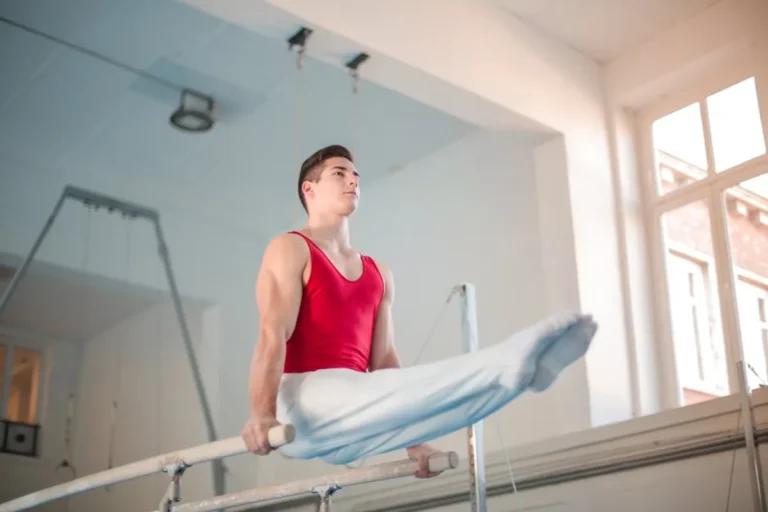
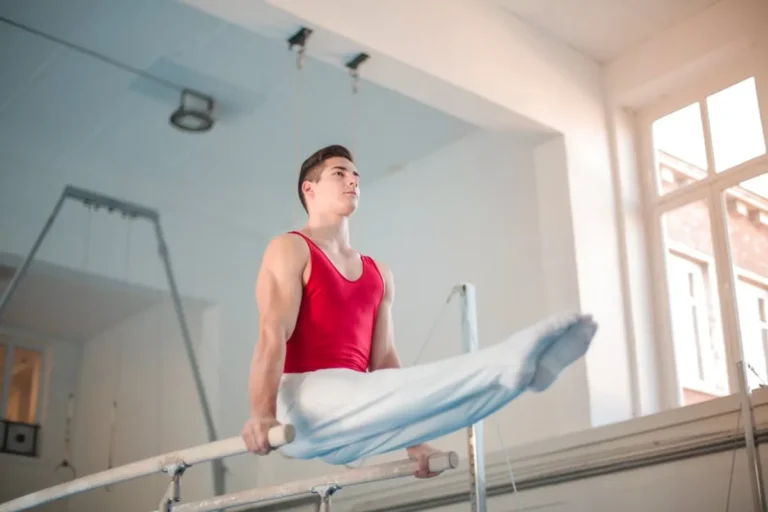
The L-sit is an isometric core strength exercise where the athlete holds their body in an 'L' shape, suspended with straight arms, legs extended straight out in front, and hips at 90 degrees. This demands immense abdominal, hip flexor, and straight-arm pressing strength. Progressing to the V-sit increases the difficulty by raising the legs even higher, requiring greater compression and core engagement. These exercises are fundamental for developing the compression strength needed for pike presses, straddle presses, and maintaining body tension in various holds.
Best for: Developing extreme core compression strength, hip flexor endurance, and straight-arm pressing power, which are vital for press handstands and maintaining tight body shapes.
Pros: Builds exceptional core strength and muscular endurance; directly enhances compression skills; improves body awareness and control in pike and straddle positions; scalable from tuck L-sits to V-sits.
Cons: Requires significant wrist flexibility and straight-arm strength, which can be limiting for beginners; can strain hip flexors if not properly warmed up and progressed; maintaining perfect form for extended periods is challenging.
Verdict: The L-sit and V-sit are benchmark exercises for assessing and building superior core and compression strength, directly impacting the ability to perform complex pressing and holding skills.
6. Handstand Holds and Handstand Push-ups
Handstands are foundational for inversion, balance, and shoulder strength in gymnastics. Holding a handstand against a wall or free-standing develops critical balance, proprioception, and isometric strength in the shoulders, triceps, and core. Progressing to handstand push-ups (HSPU) adds a dynamic pushing element, building concentric and eccentric strength essential for press handstands, piking up, and other inverted pressing movements. Both demand excellent bodyline awareness and shoulder stability.
Best for: Developing overhead pushing strength, shoulder stability, balance, and body awareness in an inverted position, crucial for press handstands, piking, and general inverted control.
Pros: Builds significant shoulder and triceps strength; improves balance and spatial awareness; enhances core stability in an inverted position; offers clear progression from wall holds to free-standing and then HSPU.
Cons: Requires considerable wrist and shoulder mobility; can be intimidating for beginners due to the inverted nature; improper form can lead to wrist, neck, or shoulder strain; free-standing handstands demand extensive practice.
Verdict: Handstand holds and push-ups are indispensable for gymnasts, providing the necessary strength, stability, and control for inverted skills and advanced pressing movements.
7. Front Lever Progressions
The front lever is an advanced straight-arm strength skill where the body is held horizontally and parallel to the ground, facing upwards, with straight arms gripping a bar or rings. This requires immense lat, core, and straight-arm pulling strength. Progressions typically involve tuck, advanced tuck, straddle, and full lever variations, systematically increasing the leverage and demand on the musculature. Mastering the front lever demonstrates exceptional relative strength and body control.
Best for: Developing extreme straight-arm pulling strength, lat activation, and full-body tension, essential for advanced bar and ring routines and demonstrating superior body control.
Pros: Builds incredible relative strength in the back and core; significantly improves straight-arm pulling capacity; serves as a benchmark for advanced bodyweight strength; enhances overall body tension and control.
Cons: Requires significant prerequisite strength and consistent, patient training; can be frustrating due to the slow progression rate; improper scapular positioning can lead to shoulder impingement.
Verdict: A pinnacle straight-arm pulling exercise, front lever progressions are a testament to advanced gymnastic strength and provide a powerful foundation for numerous high-level skills.
8. Back Lever Progressions
The back lever is another advanced straight-arm strength skill, similar to the front lever but with the body facing downwards, parallel to the ground. This exercise heavily taxes the shoulders, biceps, and core, demanding excellent shoulder stability and straight-arm pushing strength in a unique position. Like the front lever, it is progressed through tuck, advanced tuck, straddle, and full variations, each step increasing the leverage and strength requirement. It is a critical component for ring and bar routines.
Best for: Developing straight-arm pushing strength, shoulder stability, and biceps engagement in an extended position, vital for ring and bar transitions and demonstrating comprehensive body control.
Pros: Builds exceptional straight-arm pushing strength and shoulder girdle integrity; improves body awareness in an inverted and extended position; crucial for advanced ring and bar elements; provides a balanced approach to straight-arm strength with the front lever.
Cons: Can be very taxing on the shoulder joints if not approached with proper preparation and form; slow progression can be demotivating; requires specific mobility in the shoulders and wrists.
Verdict: Alongside the front lever, back lever progressions are fundamental for comprehensive straight-arm strength and shoulder health, unlocking a wide array of advanced gymnastics skills.
9. Planche Progressions
The planche is arguably one of the most iconic and challenging straight-arm strength skills in gymnastics, involving holding the entire body horizontally above the ground with only the hands supporting. This demands extraordinary strength in the shoulders, triceps, and core, along with significant wrist flexibility and balance. Progressions from tuck planche to advanced tuck, straddle, and full planche systematically increase the leverage and overall strength required, making it a benchmark for elite upper-body pushing power.
Best for: Developing extreme straight-arm pushing strength, shoulder power, and full-body tension, essential for advanced floor work, parallel bar, and ring skills, representing peak upper-body strength.
Pros: Builds unparalleled pushing strength and shoulder stability; significantly improves body tension and control; serves as a high-level benchmark for static strength; enhances wrist and forearm strength.
Cons: Extremely demanding and requires years of consistent, specific training; high risk of wrist and elbow injuries if not properly conditioned and progressed; can be highly frustrating due to the extended time required for mastery.
Verdict: The planche is the ultimate demonstration of straight-arm pushing strength and body control, an aspirational goal that, through its progressions, builds a formidable strength foundation for any gymnast.
10. Straight Arm Scapular Pulls (SAS Pulls)
Straight arm scapular pulls, often performed hanging from a bar, focus on the controlled movement of the scapulae (shoulder blades) while keeping the arms straight. This exercise isolates the muscles responsible for scapular depression and retraction, which are critical for shoulder health, stability, and power transfer in nearly all hanging and pressing gymnastics skills. It teaches the vital skill of active shoulder engagement without bending the arms, a prerequisite for advanced straight-arm strength and injury prevention.
Best for: Developing scapular control, shoulder stability, and straight-arm pulling initiation, foundational for muscle-ups, levers, and overall shoulder health on rings and bars.
Pros: Directly improves shoulder girdle stability and control; helps prevent common shoulder injuries by strengthening the supporting musculature; teaches active engagement of the lats and scapular depressors; highly scalable.
Cons: Often overlooked in favor of more 'glamorous' exercises; requires a strong mind-muscle connection to isolate scapular movement; can be challenging to perform correctly without proper instruction.
Verdict: A deceptively simple yet profoundly effective exercise, SAS pulls are non-negotiable for building robust shoulder health and the foundational control needed for advanced straight-arm gymnastics.
11. Nordic Hamstring Curls
Nordic hamstring curls are an eccentric strength exercise that specifically targets the hamstrings, glutes, and lower back, focusing on the controlled lowering phase. Performed by kneeling with ankles secured and slowly lowering the torso forward, this exercise is exceptionally effective at building strength in the posterior chain, which is crucial for explosive power in tumbling, vaulting, and landing mechanics. It also plays a significant role in reducing hamstring strain and ACL injury risk, common in dynamic sports.
Best for: Building eccentric hamstring strength, preventing hamstring injuries, enhancing explosive power in the posterior chain for tumbling and vaulting, and improving landing stability.
Pros: Exceptionally effective at strengthening the hamstrings and glutes; significantly reduces the risk of hamstring strains; improves explosive power and speed; requires minimal equipment.
Cons: Extremely challenging, often requiring assistance initially; can be difficult to progress beyond bodyweight without specialized equipment; can cause significant muscle soreness if not introduced gradually.
Verdict: A vital exercise for posterior chain development and injury prevention, Nordic hamstring curls are a smart investment for gymnasts seeking to enhance explosive power and safeguard against common lower-body injuries.
12. Pike Compressions
Pike compressions involve actively compressing the torso towards the legs while keeping both straight, often performed seated on the floor or with hands on elevated surfaces. This exercise specifically targets the deep abdominal muscles and hip flexors, developing the active flexibility and strength required for pike presses to handstand, straddle presses, and any skill demanding significant hip flexion with a straight leg. It trains the ability to dynamically shorten the front of the body, a key component of many pressing and shaping skills.
Best for: Developing active pike flexibility, deep core compression strength, and hip flexor power, directly translating to press handstands, L-sits, and V-sits.
Pros: Directly improves active flexibility in the hamstrings and hip flexors; builds powerful core compression strength; enhances body control in pike and straddle shapes; scalable by adjusting hand elevation or adding resistance.
Cons: Requires a baseline level of passive hamstring flexibility to perform effectively; can strain the lower back if performed with poor form or insufficient core engagement; progress can be slow and requires patience.
Verdict: Pike compressions are an indispensable exercise for gymnasts aiming to master press handstands and other compression-based skills, building both strength and active flexibility simultaneously.
Structuring Your Gymnastics Strength Program
Integrating these exercises into a cohesive program requires thoughtful planning. A balanced approach typically involves 2-4 strength sessions per week, depending on an athlete's overall training volume and competitive phase. Focus on compound movements first, followed by isolation or specific skill-prep exercises. Varying intensity and volume across training blocks (periodization) prevents plateaus and allows for adequate recovery.
Prioritize perfect form over repetitions or weight. For static holds, aim for 10-30 second durations across 3-5 sets. For dynamic movements, focus on controlled repetitions, typically 5-12 reps for strength, or higher for endurance. Always include a thorough warm-up specific to the day's exercises and a cool-down with static stretching. Listen to your body; progressive overload means pushing boundaries, but never at the expense of injury or overtraining.
Frequently Asked Questions
How often should I train gymnastics strength?
Most gymnasts benefit from 2-4 dedicated strength sessions per week. This allows for adequate muscle recovery and adaptation. The exact frequency depends on your training phase, overall volume of skill work, and individual recovery capacity.
Should I use weights for gymnastics strength training?
While bodyweight exercises are paramount, supplementary weighted training can be beneficial for targeting specific muscle groups or overcoming plateaus. Examples include weighted pull-ups, weighted dips, or squats. However, the primary focus should remain on mastering bodyweight control and relative strength.
How long does it take to see progress in gymnastics strength?
Progress varies significantly based on starting strength, consistency, and program design. Beginners often see noticeable improvements within 4-8 weeks. More advanced skills like levers or planches can take months or even years of dedicated training