Beginning gymnastics training requires a structured approach, prioritizing fundamental strength, flexibility, and body awareness before advancing to complex skills. For coaches, gym owners, or content creators developing resources for this niche, understanding the core drills that build a solid foundation is paramount. The selection and implementation of these initial exercises directly influence a beginner's safety, skill acquisition rate, and long-term engagement in the sport. This article outlines essential gymnastics drills specifically tailored for beginners, emphasizing their purpose, benefits, and potential challenges, providing a framework for effective program design and content development.
Key Considerations for Beginner Gymnastics Drills
When selecting and implementing beginner gymnastics drills, several factors dictate efficacy and safety. First, prioritize drills that build foundational physical attributes: core strength, upper body strength, lower body power, and flexibility. Without these, more advanced skills become not only difficult but dangerous. Second, focus on body awareness and proprioception. Beginners must understand how their body moves in space, especially when inverted or rotating. Third, ensure progressive difficulty. Drills should scaffold, meaning mastery of one skill directly supports the learning of the next. Fourth, emphasize proper form over speed or repetition; incorrect technique ingrained early is difficult to correct later and increases injury risk. Finally, always consider the psychological aspect: drills should build confidence and provide achievable challenges, fostering a positive learning environment.
1. Forward Rolls
Forward rolls are a foundational tumbling skill, introducing beginners to rotational movement and body control. They teach spatial awareness, how to absorb impact safely, and the concept of a rounded back for protection. This drill is critical for building confidence in inverted positions and preparing for more complex tumbling sequences.
Best for: Developing spatial awareness, safe falling techniques, spinal flexibility, and confidence in dynamic, inverted movements.
Pros: Low equipment requirement, high safety with proper spotting, builds fundamental body control, accessible for most beginners. Promotes understanding of body shape for tumbling.
Cons: Can be intimidating initially for those unfamiliar with inversions, improper technique risks neck strain, requires clear instruction on head positioning.
Verdict: Essential for any beginner program, forward rolls establish core principles of body shape and controlled rotation. Mastery here underpins progression to more advanced tumbling skills and minimizes injury risk.
2. Backward Rolls
Backward rolls complement forward rolls by developing control in the opposite direction of rotation. This drill challenges spatial awareness from a different perspective and requires more upper body strength to push off the floor as the body rotates over the head. It reinforces the rounded back shape and teaches controlled deceleration.
Best for: Enhancing full-body control, developing upper body pushing strength, improving spinal flexibility, and increasing comfort with backward rotation.
Pros: Builds symmetrical body control, strengthens shoulders and arms, improves kinesthetic awareness, crucial for varied tumbling pathways. Teaches safe recovery from backward falls.
Cons: Requires more initial upper body strength than forward rolls, can be more challenging to initiate for some beginners, potential for neck strain if not executed with proper hand placement and push.
Verdict: A vital progression from forward rolls, backward rolls ensure comprehensive rotational control and prepare gymnasts for complex transitions and exits from skills.
3. Handstand Holds (Wall Assisted)
The handstand is a cornerstone of gymnastics, demanding significant upper body strength, core stability, and balance. Wall-assisted handstand holds allow beginners to build the necessary strength and body alignment without the immediate pressure of balancing independently. This drill focuses on stacking joints and maintaining a hollow body position.
Best for: Building static upper body strength, developing core stability, establishing proper body alignment, and desensitizing beginners to inverted positions.
Pros: Reduces fear of inversion, provides immediate feedback on body line against a wall, directly strengthens shoulders and triceps, improves wrist flexibility. Scalable by adjusting hold duration.
Cons: Can place pressure on wrists if not properly warmed up, requires consistent focus on body tension to avoid arching the back, some beginners may struggle with initial kick-up.
Verdict: Indispensable for handstand progression, wall holds are the primary method for beginners to acquire the strength and body awareness required for freestanding inversions.
4. Bridge (Back Bend)
The bridge, or back bend, is a fundamental flexibility and strength drill for the entire posterior chain, especially the spine, shoulders, and hips. It is essential for developing the arch shape required in numerous gymnastics skills, from walkovers to back handsprings. Beginners focus on achieving a full arch with straight arms and legs.
Best for: Increasing spinal flexibility, strengthening the shoulders and glutes, improving hip flexor mobility, and preparing for back walkovers and other arch-based skills.
Pros: Directly improves flexibility crucial for advanced skills, strengthens often-neglected posterior muscles, can be modified with blocks for assistance, enhances body control in an arched position.
Cons: Requires significant shoulder and spinal mobility, improper technique can strain the lower back, some beginners find it intimidating due to the inverted perspective.
Verdict: A critical drill for developing dynamic flexibility and strength in the back and shoulders, the bridge is a prerequisite for a wide array of intermediate and advanced gymnastics movements.
5. Cartwheels
Cartwheels introduce lateral rotation and dynamic balance, bridging foundational rolls with more complex tumbling. This drill teaches the concept of hand-foot-foot-hand timing, maintaining a straight body line through the inverted phase, and controlled weight transfer. It builds confidence in moving through an inverted, sideways position.
Best for: Developing dynamic balance, lateral body control, coordination, and preparing for round-offs and aerial skills.
Pros: Highly engaging and motivating for beginners, improves spatial awareness in a new plane of motion, strengthens core and limbs dynamically, provides a stepping stone to more complex tumbling.
Cons: Requires good shoulder stability and wrist strength, improper hand placement can lead to crooked or uncontrolled movements, needs clear instruction on hand-foot sequencing.
Verdict: Cartwheels are a cornerstone of beginner tumbling, providing a dynamic challenge that integrates strength, flexibility, and coordination, essential for future skill development.
6. L-Sits (or Tuck Holds)
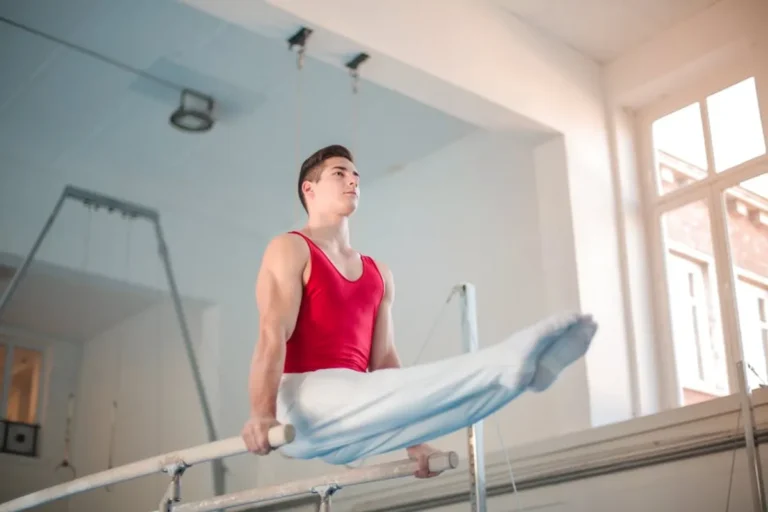
L-sits, or their scaled version, tuck holds, are powerful drills for developing extreme core strength and upper body pushing strength. Executed on the floor or parallel bars, they require lifting the body off the ground with straight arms and holding the legs either tucked or extended straight out in front. This builds static hold capacity.
Best for: Cultivating immense core strength, shoulder depression and protraction strength, hip flexor engagement, and overall body tension for static holds.
Pros: Highly effective for core and upper body isometric strength, improves shoulder health, scalable through tucking legs or using parallettes, directly translates to rings and bar work.
Cons: Very challenging for true beginners lacking initial strength, can cause wrist discomfort if not properly conditioned, requires significant hip flexor strength which can be tight.
Verdict: L-sits are an advanced beginner or intermediate core and upper body strength drill, crucial for developing the static hold power needed for rings, parallel bars, and floor elements.
7. Straddle Stretches (and Pike)
Flexibility is non-negotiable in gymnastics, and straddle and pike stretches are fundamental for hip and hamstring mobility. The straddle involves sitting with legs wide apart, while the pike involves legs together. These drills improve range of motion for splits, leaps, and various tumbling and beam skills, preventing injury and enabling cleaner lines.
Best for: Increasing hamstring flexibility, improving hip abductor and adductor mobility, enhancing overall lower body range of motion, and preventing muscle strains.
Pros: Essential for achieving full splits and pikes, reduces injury risk, improves body lines in skills, can be performed anywhere without equipment, scalable through passive and active stretching.
Cons: Requires consistent, patient effort to see significant gains, can be uncomfortable initially, improper form (rounding back) limits effectiveness and can cause strain.
Verdict: These foundational stretches are critical for developing the necessary lower body flexibility for nearly all gymnastics disciplines, directly impacting skill execution and aesthetic quality.
8. Bear Crawls and Crab Walks
These animal walks are excellent for developing full-body coordination, cross-lateral movement patterns, and foundational strength in a dynamic, low-impact manner. Bear crawls strengthen the shoulders, core, and hips while improving coordination. Crab walks focus on the posterior chain, enhancing glute and hamstring strength alongside shoulder stability.
Best for: Improving full-body coordination, developing dynamic strength, enhancing proprioception, and building endurance in a fun, accessible format.
Pros: Engages multiple muscle groups simultaneously, low risk of injury, no equipment needed, improves body awareness and motor control, serves as an effective warm-up or conditioning drill.
Cons: Can be underestimated in its benefits, some beginners may struggle with coordination initially, limited direct skill translation compared to specific gymnastics movements.
Verdict: Bear crawls and crab walks are valuable drills for building general athleticism, coordination, and foundational strength, supporting overall physical readiness for gymnastics.
9. Hollow Body Holds
The hollow body hold is arguably the most important core strength and body tension drill in gymnastics. It involves lying on the back and lifting the shoulders and legs slightly off the ground, maintaining a perfectly rounded, "hollow" shape. This position is the basis for nearly all static and dynamic gymnastics skills, from swings on bars to handstands.
Best for: Developing extreme core strength, teaching full-body tension, establishing the fundamental body shape for gymnastics, and improving control in inverted and swinging movements.
Pros: Directly translates to virtually every gymnastics skill, highly effective for core development, scalable by adjusting arm/leg position, teaches vital body awareness for maintaining shape.
Cons: Can be very challenging to maintain proper form for beginners, requires constant focus to prevent arching the lower back, initial discomfort can be high.
Verdict: The hollow body hold is non-negotiable for any aspiring gymnast. Mastery of this shape and the associated body tension is fundamental for safe and effective skill progression.
10. Arch Body Holds
Complementing the hollow body, the arch body hold focuses on strengthening the posterior chain and developing the opposing body shape. Lying on the stomach, the gymnast lifts the chest and legs simultaneously, maintaining a gentle arch. This drill is crucial for back handsprings, walkovers, and maintaining an open shoulder position.
Best for: Strengthening the lower back, glutes, and hamstrings, improving spinal extension, developing the arch body shape, and preparing for back tumbling skills.
Pros: Balances the core development from hollow body holds, strengthens often-weak posterior muscles, improves posture, essential for dynamic arching movements in tumbling.
Cons: Can strain the lower back if not executed with control and proper muscle engagement, some beginners may lack the flexibility or strength to achieve a full arch without compensation.
Verdict: The arch body hold is a fundamental drill for balanced core development and is critical for building the strength and flexibility required for backward tumbling and other arch-based skills.
11. Conditioning (Squats, Lunges, Push-ups)
General physical preparedness is crucial. Bodyweight squats, lunges, and push-ups are fundamental conditioning drills that build overall strength and muscular endurance. Squats and lunges develop powerful legs for jumps and landings, while push-ups build upper body pushing strength essential for handstands, presses, and vaulting.
Best for: Building foundational muscular strength and endurance, improving joint stability, developing power for dynamic movements, and preventing general overuse injuries.
Pros: Highly accessible with no equipment, scalable for various fitness levels, directly improves strength relevant to all gymnastics disciplines, forms the base of physical readiness.
Cons: Can be overlooked in favor of skill-specific drills, improper form can lead to inefficient muscle activation or injury, requires consistent progression to remain challenging.
Verdict: These basic conditioning exercises are indispensable for any beginner gymnastics program, providing the raw strength and endurance necessary to safely execute and progress in specific skills.
12. Basic Jumps (Tuck Jumps, Star Jumps)
Basic jumps are essential for developing explosive leg power, coordination, and control in the air and upon landing. Tuck jumps involve bringing the knees to the chest, while star jumps involve spreading limbs wide. These drills improve vertical leap, body control during flight, and the ability to absorb impact, which is vital for vaulting, tumbling, and beam work.
Best for: Developing explosive leg power, improving dynamic balance, enhancing aerial body control, and teaching safe landing mechanics.
Pros: Builds power directly applicable to vault and tumbling, improves cardiovascular fitness, no equipment required, helps develop spatial awareness during flight, teaches controlled landing.
Cons: Can be high impact on joints if not executed with proper landing technique, requires consistent effort to build significant power, some beginners may struggle with coordination.
Verdict: Fundamental for developing explosive power and aerial control, basic jumps are crucial for preparing gymnasts for the dynamic demands of vault, tumbling, and beam routines.
Implementing a Beginner Gymnastics Drill Program
Structuring a beginner gymnastics program around these drills requires careful consideration of progression, repetition, and feedback. Start with mastery of basic body shapes (hollow, arch) and static holds before introducing dynamic movements. Introduce drills incrementally, allowing adequate time for acquisition before moving on. For example, consistent hollow body holds should precede attempts at handstands. Incorporate conditioning drills regularly to build a robust physical foundation. Utilize consistent verbal cues and hands-on spotting to ensure proper form and build confidence. Document progress through observation and, where appropriate, video analysis. Emphasize consistency over intensity, especially in the early stages, to build muscle memory and prevent burnout. A well-structured program will systematically layer skills, ensuring each new challenge is supported by previously mastered fundamentals.
Frequently Asked Questions
How often should beginners practice gymnastics drills?
For optimal progress and injury prevention, beginners should aim for 2-3 structured training sessions per week, allowing for adequate rest and recovery between sessions. Consistency is more critical than volume in the initial stages.
What is the most important drill for a beginner gymnast?
While all drills are foundational, the hollow body hold is arguably the most critical. It teaches the fundamental body tension and shape required for almost every gymnastics skill, from handstands to bar swings and tumbling.
Can these drills be done at home without specialized equipment?
Many foundational drills, such as hollow body holds, arch holds, squats, lunges, and various stretches, require minimal to no specialized equipment and can be effectively practiced at home. However, drills involving inversions or rotations (e.g., handstands, rolls, cartwheels) benefit significantly from professional instruction and spotting for safety and proper technique.
How long does it take for a beginner to see progress?
Progress varies significantly based on individual aptitude, consistency, and coaching quality. However, with consistent practice (2-3 times per week), beginners typically start to see noticeable improvements in strength, flexibility, and basic skill execution within 4-8 weeks.
What is the role of flexibility in beginner gymnastics?
Flexibility is paramount in gymnastics, enabling a greater range of motion, improving body lines, and significantly reducing the risk of injury. Drills like straddle and pike stretches are essential from the outset to build the necessary mobility for more advanced skills and to maintain joint health.