For gymnasts, a strong core is not merely an aesthetic goal; it is the fundamental pillar supporting every dynamic movement, static hold, and intricate skill. The core musculature—comprising the abdominals, obliques, lower back, and hips—acts as the body's powerhouse, transferring force between the upper and lower extremities. Without a robust and stable core, gymnasts face compromised power generation, reduced balance, increased injury risk, and limitations in executing complex routines on beam, bars, vault, and floor. Selecting the right core exercises, therefore, moves beyond general fitness to targeted, functional training that directly translates to improved performance and longevity in the sport.
This guide details the most effective core exercises specifically tailored for gymnasts, emphasizing their unique benefits for skill development, injury prevention, and overall athletic prowess. Each exercise is evaluated for its contribution to the specific demands of gymnastics, providing a clear pathway for coaches and athletes to integrate them strategically into training regimens.
Key Considerations for Gymnastics Core Training
Effective core training for gymnasts transcends simple crunches or sit-ups. The demands of gymnastics require a core that is not only strong but also highly stable, flexible, and capable of generating power through a full range of motion. When selecting and implementing core exercises, prioritize these factors:
- Functional Strength: Exercises should mimic or directly support the movements found in gymnastics, focusing on anti-extension, anti-flexion, anti-lateral flexion, and anti-rotation. This ensures the core can stabilize the spine during dynamic actions like tumbling, swinging, and twisting.
- Integrated Movement: Gymnastics rarely isolates muscle groups. Core training should reflect this, incorporating exercises that engage the core in conjunction with the hips, shoulders, and limbs, fostering whole-body coordination and efficiency.
- Progressive Overload: Just like any other strength training, core work requires progressive challenges. This means increasing repetitions, sets, duration of holds, reducing leverage, or adding external resistance as strength improves.
- Injury Prevention: A strong core is a primary defense against spinal injuries, particularly in the lumbar region, which is highly susceptible to stress in gymnastics. Exercises should build resilience and stability to protect the spine during high-impact landings and extreme ranges of motion.
- Specificity: While general core strength is beneficial, gymnasts benefit most from exercises that target the specific needs of their apparatus or event. For example, hollow body holds are crucial for bar work, while arch holds support back handsprings.
1. Hollow Body Hold and Rocks
The hollow body position is the foundational shape for nearly all gymnastic skills, from basic swings on bars to complex tumbling passes. The hollow body hold teaches the body to maintain a rigid, slightly rounded posture by engaging the rectus abdominis and obliques, while simultaneously pressing the lower back into the ground. When progressed to rocks, it adds a dynamic element, requiring continuous core engagement to control the rocking motion without breaking the hollow shape. This exercise directly translates to aerial awareness, stability in flight, and efficient force transfer.
Best for: Developing the fundamental body tension and shape required for virtually all gymnastics skills, particularly swings, handstands, and aerial maneuvers. It is critical for teaching body control and spinal stability.
Pros:
- Directly reinforces the most common and essential gymnastics body shape.
- Builds isometric strength and endurance in the anterior core.
- Requires no equipment, making it highly accessible for all training environments.
- Significantly improves body awareness and control during complex movements.
Cons:
- Can be challenging for beginners to maintain proper form, often leading to arching the lower back.
- Lack of immediate external feedback can make self-correction difficult without a coach.
- Primarily targets anterior core, requiring complementary exercises for posterior chain balance.
Verdict: Non-negotiable for gymnasts. Mastery of the hollow body is a prerequisite for advancing in the sport, making this exercise a core component of any effective training program. Focus on perfect form over duration initially.
2. Arch Body Hold and Rocks
Complementing the hollow body, the arch body hold focuses on strengthening the posterior chain, including the erector spinae, glutes, and hamstrings. This position involves lifting the chest and thighs off the ground while maintaining a slight arch in the back, mimicking the "superman" shape often seen in back handsprings, dismounts, and certain aerials. Like the hollow body, adding a rocking motion increases the dynamic demand and endurance requirements, crucial for maintaining form through sequences.
Best for: Strengthening the posterior core and back extensors, essential for powerful back tumbling, handsprings, and maintaining an open body position during rotations and landings.
Pros:
- Balances the anterior core work from hollow body exercises, promoting spinal health.
- Develops strength and endurance in the lower back and glutes, critical for power generation.
- Improves body awareness in extension, a key component of many gymnastic skills.
- Requires no equipment and can be performed anywhere.
Cons:
- Beginners may struggle to lift sufficiently or maintain the arch without straining the neck.
- Can be difficult to differentiate between proper back extension and hyperextension without guidance.
- Less emphasis on rotational or anti-rotational core strength.
Verdict: Essential for a balanced core and spinal integrity. The arch body hold directly contributes to the power and safety of backward-moving skills, making it a critical partner to hollow body training.
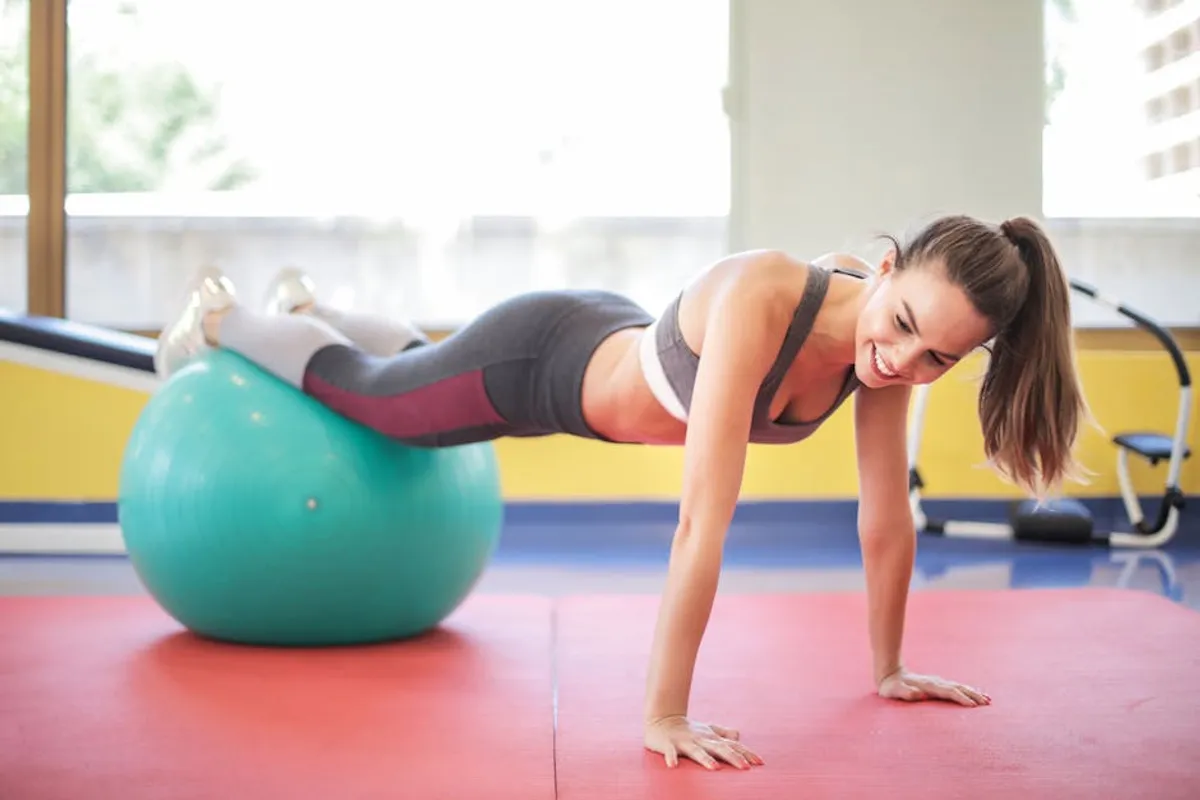
3. Plank Variations (Standard, Side, Weighted)
The plank is a cornerstone isometric exercise that builds full-body tension and core stability. By maintaining a rigid straight line from head to heels, gymnasts engage the entire anterior core, obliques, and even the glutes and quads. Introducing variations like the side plank targets the obliques and lateral stabilizers, crucial for anti-lateral flexion and rotational control. Weighted planks, by adding external resistance, significantly increase the demand on the core's ability to resist gravity and maintain a neutral spine, mirroring the forces experienced during dynamic gymnastics movements.
Best for: Developing comprehensive core stability, anti-extension, anti-lateral flexion, and full-body tension, applicable to handstands, beam work, and controlled landings.
Pros:
- Highly effective for building isometric strength and endurance across the entire core.
- Side planks specifically target oblique strength, vital for twisting and lateral stability.
- Weighted planks allow for progressive overload, increasing core resilience under load.
- Improves posture and reduces the risk of lower back pain by strengthening stabilizing muscles.
Cons:
- Can become monotonous if variations are not introduced regularly.
- Improper form (sagging hips, arched back) can negate benefits and potentially strain the lower back.
- Primarily isometric; dynamic core strength requires complementary exercises.
Verdict: A fundamental exercise for static core strength and spinal protection. Its versatility through variations ensures continuous challenge and addresses multiple planes of motion, making it indispensable for gymnasts.
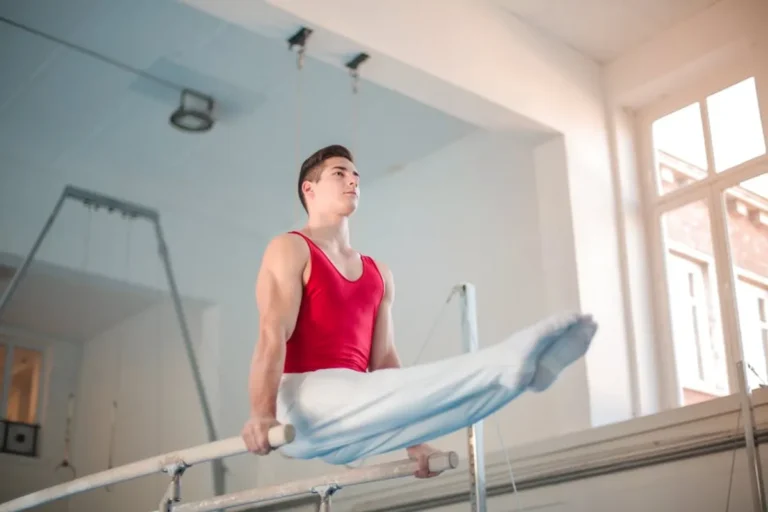
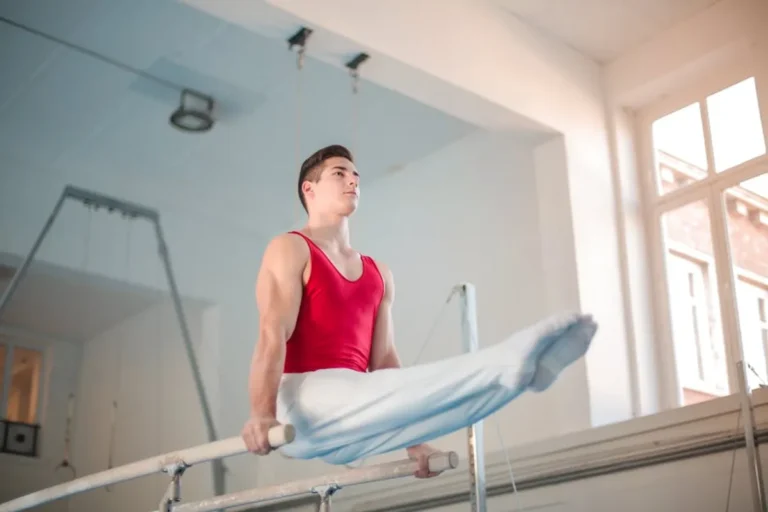
4. L-Sit and V-Sit Progressions
The L-Sit and its more advanced counterpart, the V-Sit, are hallmarks of advanced core strength and body control. These exercises require immense strength from the rectus abdominis, hip flexors, and shoulder depressors to lift the entire lower body off the ground and maintain a rigid L or V shape. They demonstrate not only core power but also significant shoulder girdle stability and flexibility, all crucial components for complex bar and floor skills.
Best for: Developing extreme anterior core strength, hip flexor power, and shoulder depression strength, critical for high-level bar skills, p-bar work, and floor elements requiring significant compression.
Pros:
- Builds exceptional core strength that directly translates to holding shapes in the air and on apparatus.
- Enhances hip flexor strength, essential for pike compression and leg lifts.
- Requires and develops significant shoulder stability and upper body strength.
- Serves as a clear benchmark for advanced core and body control.
Cons:
- Requires substantial baseline strength and flexibility, making it inaccessible for beginners.
- Can place significant strain on the wrists if not properly conditioned or supported.
- High demand on hip flexors can lead to tightness if not balanced with stretching.
Verdict: A gold standard for advanced core and full-body tension. While challenging, the progression towards L-Sits and V-Sits offers tangible performance benefits for gymnasts aiming for elite-level skills.
5. Hanging Leg Raises and Toes-to-Bar
Hanging leg raises and the more advanced toes-to-bar exercise are dynamic movements that target the entire anterior core, particularly the lower abdominals and hip flexors. Performed while hanging from a bar, these exercises demand significant grip strength, shoulder stability, and controlled core engagement to lift the legs and bring them towards the chest or even touch the toes to the bar. They build both concentric and eccentric strength, crucial for controlling the body during swings and dismounts.
Best for: Developing dynamic anterior core strength, hip flexor power, and grip endurance, vital for bar routines, transitions, and maintaining hollow body during swings.
Pros:
- Excellent for building dynamic core strength and hip flexor power.
- Improves grip strength and shoulder stability, which are critical for bar work.
- Engages the core through a large range of motion, enhancing flexibility and control.
- Allows for progression from bent-knee raises to straight leg raises and toes-to-bar.
Cons:
- Requires access to a pull-up bar or similar hanging apparatus.
- Can be challenging for individuals with weak grip strength or shoulder mobility issues.
- Improper form can lead to excessive swinging or reliance on momentum rather than core strength.
Verdict: A highly effective dynamic core exercise that directly supports bar skills and overall body control in a hanging position. Essential for gymnasts needing to generate power and maintain shape during swings and complex sequences.
6. Ab Rollouts (Ab Wheel or Barbell)
Ab rollouts are a potent anti-extension exercise that challenges the core to resist hyperextension of the lumbar spine. Using an ab wheel or a barbell, the gymnast extends their body forward from a kneeling or standing position, engaging the rectus abdominis, obliques, and lats to control the movement and pull back to the starting position. This exercise builds immense eccentric strength and core stability, crucial for absorbing impact and maintaining a stable torso during powerful movements.
Best for: Building anti-extension strength, eccentric core control, and full-body tension, particularly beneficial for tumbling, vaulting, and any skill requiring a strong, stable torso upon landing or impact.
Pros:
- Extremely effective for developing anti-extension strength and spinal stability.
- Engages the lats and shoulders, contributing to upper body strength and connection.
- Provides a significant eccentric challenge, which is vital for injury prevention and power absorption.
- Allows for progressive overload by increasing range of motion or moving to a standing rollout.
Cons:
- Requires an ab wheel or barbell, which may not always be available.
- High risk of lower back strain if not performed with strict form and proper core engagement.
- Can be too advanced for beginners without adequate baseline core strength.
Verdict: A powerful exercise for advanced core strength and spinal protection. Its focus on anti-extension is directly applicable to the high-impact nature of gymnastics, making it a valuable addition for injury-resilient athletes.
7. Dragon Flags
The Dragon Flag is an advanced core exercise that demands exceptional strength from the entire anterior core, particularly the lower abdominals, obliques, and hip flexors. Performed by lying on a bench, gripping overhead, and lifting the entire body (from shoulders to feet) into a rigid, straight line, then slowly lowering it, the Dragon Flag builds incredible eccentric and isometric strength. It is a true test of body control and core power, often seen as a benchmark for elite core development.
Best for: Developing maximal anterior core strength, full-body rigidity, and eccentric control, beneficial for high-level static holds, powerful dismounts, and maintaining a tight body line in complex aerial skills.
Pros:
- Builds unparalleled anterior core strength and full-body tension.
- Enhances eccentric control, crucial for injury prevention and absorbing force.
- Develops exceptional body awareness and the ability to maintain a rigid body line.
- Serves as a clear indicator of elite core strength and control.
Cons:
- Extremely challenging and requires significant prerequisite core strength.
- Can be frustrating for beginners due to the high strength demands.
- Requires a sturdy bench or similar anchor point.
- Risk of lower back strain if form is compromised.
Verdict: A pinnacle core exercise for gymnasts seeking to develop absolute core power and control. While not for beginners, the Dragon Flag offers immense benefits for those ready to tackle its challenge, directly translating to superior body tension and stability.
8. Superman and Back Extensions
Similar to the arch body hold but often performed with a greater range of motion or on a GHD (Glute-Ham Developer) machine, Superman and back extensions specifically target the posterior chain. These exercises strengthen the erector spinae, glutes, and hamstrings, essential for creating power in extension and protecting the spine. When performed dynamically, they build endurance and control in the back muscles, which are critical for maintaining an arched shape during skills like back handsprings, back tucks, and dismounts.
Best for: Strengthening the entire posterior chain, improving back flexibility, and developing powerful hip extension, which is fundamental for all backward-moving skills and maintaining an open body position.
Pros:
- Directly strengthens the lower back, glutes, and hamstrings, crucial for spinal health and power.
- Improves hip extension, a key component of many powerful gymnastic movements.
- Can be performed with bodyweight (Superman) or with added resistance (back extensions) for progression.
- Helps balance anterior core strength and prevent postural imbalances.
Cons:
- Over-arching or using excessive weight can lead to lower back strain.
- Requires a GHD machine for optimal back extensions, which may not always be available.
- Less emphasis on rotational or anti-rotational core strength.
Verdict: Fundamental for a strong and resilient posterior chain. These exercises are vital for gymnasts to generate power in extension, protect the spine during landings, and maintain proper body shape in numerous skills.
9. Russian Twists (Controlled)
Controlled Russian Twists focus on developing rotational and anti-rotational strength in the obliques and rectus abdominis. Unlike fast, high-repetition twists, the controlled version emphasizes slow, deliberate movement, often with a slight pause at the end of each rotation, engaging the core to stabilize the torso. This exercise is crucial for gymnasts who need to generate torque for twisting elements and then control that rotation upon landing or transitioning.
Best for: Enhancing oblique strength, rotational power, and anti-rotational stability, particularly important for twisting elements on floor and vault, as well as maintaining control during apparatus transitions.
Pros:
- Specifically targets the obliques, crucial for twisting and lateral core stability.
- Improves rotational power and the ability to control rotational forces.
- Can be performed with bodyweight or with a medicine ball/plate for added resistance.
- Helps develop the core control needed for complex twisting skills.
Cons:
- Fast, uncontrolled movements can lead to lower back strain and negate core engagement.
- Requires strict attention to form to avoid simply swinging the weight.
- Less emphasis on anti-extension or anti-flexion core strength.
Verdict: A valuable exercise for developing dynamic oblique strength and rotational control. When performed with precision, it directly supports the intricate twisting maneuvers common in advanced gymnastics.
10. Bird-Dog
The Bird-Dog exercise is a low-impact, highly effective movement for developing spinal stability and anti-rotation strength. Performed on all fours, it involves simultaneously extending one arm and the opposite leg, requiring the core to prevent any rotation or arching of the lower back. This exercise teaches the core to stabilize the spine during contralateral limb movements, mimicking the coordinated limb actions in many gymnastics skills while maintaining a stable torso.
Best for: Improving spinal stability, anti-rotation, and body awareness, particularly beneficial for beam work, single-leg landings, and maintaining a neutral spine during dynamic, asymmetrical movements.
Pros:
- Excellent for developing deep core stability and anti-rotational strength.
- Low-impact and suitable for all levels, including rehabilitation and pre-habilitation.
- Enhances body awareness and coordination between the core and limbs.
- Strengthens the multifidus and other deep spinal stabilizers.
Cons:
- May be perceived as too basic by advanced gymnasts, though its benefits for stability remain.
- Requires strict attention to form to avoid compensatory movements.
- Less emphasis on raw power or dynamic strength compared to other exercises.
Verdict: A foundational exercise for spinal health and stability. The Bird-Dog is crucial for teaching the core to maintain a neutral spine under load, directly supporting injury prevention and precise body control on apparatus.
11. GHD Sit-ups (Controlled)
GHD (Glute-Ham Developer) sit-ups, when performed with control, offer an extended range of motion for the rectus abdominis and hip flexors, building both strength and flexibility. Unlike traditional sit-ups, the GHD allows the gymnast to extend the torso past parallel, engaging the abdominals through a greater stretch before powerfully contracting to return to an upright position. The emphasis here is on controlled movement, avoiding excessive hyperextension or using momentum.
Best for: Developing powerful concentric and eccentric strength in the anterior core and hip flexors, enhancing flexibility, and improving the ability to transition from extension to flexion with control, useful for complex floor and vault elements.
Pros:
- Provides a significantly greater range of motion compared to floor sit-ups, enhancing strength and flexibility.
- Builds powerful concentric and eccentric strength in the entire anterior core.
- Can be progressed by adding weight or increasing the speed of the concentric phase.
- Engages the hip flexors powerfully, aiding in pike compression and leg lifts.
Cons:
- Requires access to a GHD machine, which may not be universally available.
- Improper form or excessive speed can place undue stress on the lower back and hip flexors.
- Can be too intense for beginners or those with pre-existing lower back issues.
Verdict: A highly effective exercise for developing dynamic core strength and flexibility when executed with strict control. It offers unique benefits for gymnasts needing to transition powerfully between extended and flexed body positions.
12. Pike Compressions
Pike compressions, also known as pike lifts or pike pulses, are a critical exercise for developing the deep abdominal and hip flexor strength required for pike shapes, L-sits, and V-sits. Performed seated with legs straight, the gymnast uses their core and hip flexors to lift their straight legs off the ground, or to compress their torso towards their legs. This exercise specifically targets the ability to maintain a tight pike position, essential for many tumbling and bar skills.
Best for: Building deep anterior core strength, hip flexor power, and the ability to achieve and hold a tight pike position, crucial for L-sits, V-sits, and various tumbling and bar skills.
Pros:
- Directly targets the specific strength required for pike shapes and compression.
- Enhances hip flexor strength and flexibility.
- Improves body awareness and control in a flexed position.
- Requires no equipment and can be performed anywhere.
Cons:
- Requires a baseline level of hamstring flexibility and hip flexor strength to perform effectively.
- Can be challenging for those with tight hamstrings, limiting range of motion.
- Primarily targets anterior core and hip flexors, requiring complementary exercises for overall balance.
Verdict: Indispensable for gymnasts needing to master pike shapes and develop the requisite hip flexor and deep abdominal strength. Its direct carryover to numerous skills makes it a high-priority exercise.
Integrating Core Training into a Gymnastics Program
Effective core training for gymnasts is not a standalone activity but an integrated component of their overall program. To maximize benefits and prevent overtraining, consider these strategies:
- Periodization: Vary core exercises and intensity based on the training cycle. During foundational phases, focus on basic isometric holds and stability. As competition approaches, introduce more dynamic and sport-specific movements.
- Frequency: Incorporate core work 3-5 times per week, allowing for adequate recovery. Short, focused sessions (10-15 minutes) are often more effective than infrequent, lengthy ones.
- Progression: Continuously challenge the core. Once an exercise becomes easy, increase duration, repetitions, leverage, or add resistance. For example, progress from hollow body holds to hollow body rocks, then to hollow body holds with ankle weights.
- Listen to the Body: Gymnasts are prone to lower back issues. Any sharp pain during core exercises indicates improper form or excessive load. Prioritize perfect technique over quantity.
- Balance: Ensure a balance between anterior (abs), posterior (lower back, glutes), and lateral (obliques) core work. Over-emphasizing one area can lead to imbalances and increased injury risk.
Frequently Asked Questions About Core Exercises for Gymnasts
Q: How often should gymnasts train their core?
A: Gymnasts should aim for 3-5 core training sessions per week. These can be short, focused sessions (10-15 minutes) integrated into warm-ups, cool-downs, or dedicated strength blocks. Consistency